














 US Senate to Decide Future of Revised Clarity Act
 Article Contributors


 Fact checked by
 Read Time: 2mins
 Published: 14/09/2026 | Updated: 06/10/2026


High-Stakes Senate Floor Test Ahead
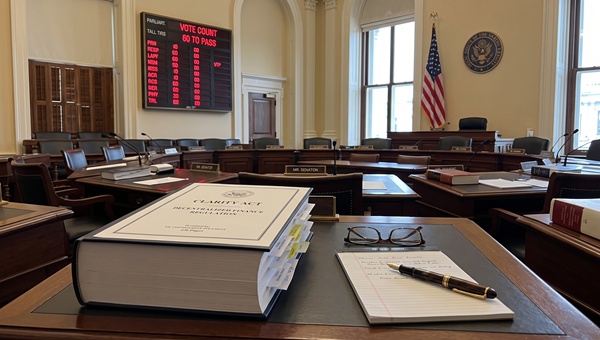
Congressional leaders are preparing to test lawmaker support for broad federal digital asset legislation as the Senate approaches a key procedural vote on September 15. Senate Majority Leader John Thune scheduled the action shortly after lawmakers returned to Washington.
The updated 630-page iteration of the Clarity Act requires at least 60 votes to proceed to floor debate and potential amendments.
With Republicans occupying 53 seats, the bill’s primary proponent, Senator Cynthia Lummis of Wyoming, must secure support from at least seven Democrats or independents. Although sponsors incorporated over 114 Democratic recommendations during recent negotiation sessions, no Democratic lawmakers have officially committed to back the measure.
Failing to reach the 60-vote barrier would freeze the legislation, preventing further floor debate or amendment votes.
Reclassifying Protocols Under Federal Watchdog
The newly released draft introduces a specific classification termed a “non-decentralized finance trading protocol.” This designation targets individuals or combined groups maintaining direct or indirect management capacity to alter network functionality, operational mechanics, or underlying consensus rules.
Entities falling under this definition will be required to formally register with the Commodity Futures Trading Commission (CFTC).
The bill mandates that the CFTC and the Department of the Treasury establish distinct standards distinguishing completely autonomous codebases from platforms operating with centralized control or governance power.
This specific regulatory framework concentrates on spot and cash digital commodity transactions, addressing concerns previously raised by tribal governments and market participants without altering separate legal frameworks governing prediction markets.
Unresolved Ethics Mandates and Stablecoin Yield Disputes
Despite technical revisions, major policy disagreements persist between political factions and industry stakeholders.
Democratic representatives continue to voice strong objections to the bill’s ethics framework, which places temporary restrictions on public officials, government workers, and their spouses regarding the issuance or sponsorship of digital tokens.
Opponents criticize the sunset provision scheduled for January 2029 and argue that primary enforcement power should not rest solely with the Department of Justice.
Concurrently, traditional banking associations and digital currency advocacy groups remain locked in intense lobbying efforts over stablecoin rewards.
Financial institutions, backed by regional organizations like the Independent Community Bankers of America, caution that yield-bearing stablecoins could draw liquidity away from standard FDIC-insured deposits.
Conversely, crypto advocacy bodies like Stand With Crypto contend that operational or transaction-linked rewards differ significantly from standard bank interest payouts.
Dividing Powers Between the CFTC and SEC
Beyond specific operational rules, the Clarity Act establishes comprehensive federal legal definitions across the broader digital asset ecosystem.
The legislation assigns spot market surveillance over digital commodities to the CFTC, while leaving securities oversight under the Securities and Exchange Commission (SEC) when assets trade as investment contracts or via registered stock exchanges.
Because the House of Representatives previously approved its own version of the framework, both legislative bodies must align on identical statutory text before any final bill reaches President Donald Trump for signature.
With the 2026 midterm election season approaching, legislative time remains constrained, making the upcoming procedural vote a decisive moment for domestic digital asset governance.


 eabungana@gmail.com

