














 Volvo Explores Closed-Loop Digital Ledger for Logistics Transactions
 Article Contributors


 Fact checked by
 Read Time: 2mins
 Published: 17/07/2026 | Updated: 22/07/2026


Streamlining Supply Chains
The industrial manufacturing landscape relies heavily on fragmented logistics, where tracking parts and reconciling invoices often requires navigating disjointed corporate databases.
During a recent interview hosted by the Cardano Foundation, Ivan Branco, the head of information management, AI, and analytics at Volvo Group, shed light on the company’s efforts to dismantle these operational silos.
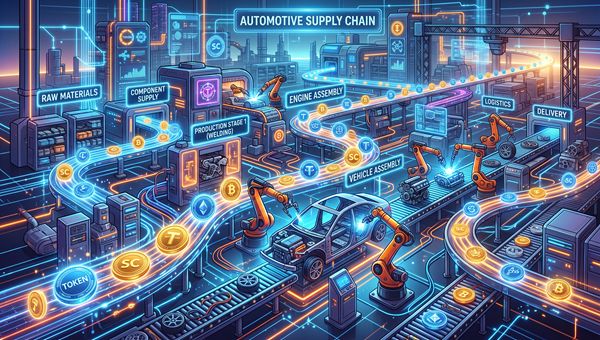
The initiative revolves around a private, permissioned framework connecting the manufacturer directly with its logistical and material vendors. Within this ecosystem, the proprietary token functions as a friction-free medium of exchange.
Rather than relying on public digital currencies vulnerable to price swings, this internal asset offers a unified tool for recording transactions and managing value without exposing the automotive corporation to external market volatility.
Tracking and Regulatory Alignment
Beyond processing financial settlements, the integration of cryptographic infrastructure addresses growing pressures surrounding industrial transparency. A primary challenge for modern manufacturers is tracking the exact geographical provenance of individual materials across multiple tiers of suppliers.
A shared ledger provides an immutable record, ensuring that sourcing documentation cannot be manipulated or altered retroactively.
This capability is increasingly vital as corporations navigate strict international trade restrictions and economic sanctions. Furthermore, Europe is preparing for the introduction of Digital Product Passports, which mandate extensive disclosures regarding product lifecycles.
By embedding tracking architecture into its core supply network, the company can seamlessly document components from initial manufacturing through long-term servicing and remanufacturing phases.
Advancing Past Operations
This exploration marks a significant strategic pivot from the company’s earlier encounters with decentralized technology. In 2019, the group’s automotive counterparts teamed up with tracking specialist Circulor to monitor cobalt extraction, ensuring the raw material used in electric vehicle batteries was ethically sourced.
That framework focused squarely on material transparency to prevent child labor and conflict minerals from entering the production line—an initiative that later expanded to sister brand Polestar.
The current pilot, however, goes a step further by layering transactional utility directly onto supply logs. Instead of merely watching where materials go, the new system explores how value can move in tandem with physical parts.
Navigating Scalability Realities
Despite successful initial trials, the enterprise blockchain ecosystem faces significant roadblocks before widespread implementation becomes viable. Industrial leaders must overcome steep integration hurdles when connecting modern ledger systems to legacy corporate software.
Furthermore, challenges surrounding network scalability, long-term system maintenance, and a general lack of specialized digital literacy across the broader workforce continue to slow down widespread deployment.
As a result, this digital token remains strictly confined to a controlled research environment. The corporation has not finalized any plans for a commercial rollout or a public launch of the digital asset, viewing the project primarily as a valuable case study in operational simplification.


 eabungana@gmail.com

