














 Web3 Gaming Hits a 2026 Crossroads
 Article Contributors


 Fact checked by
 Read Time: 2mins
 Published: 10/11/2026 | Updated: 22/11/2026


A Wave of 2026 Studio Closures Tests the Ownership Promise
The gap between blockchain theory and commercial reality widened noticeably between June and September 2026 as several prominent developers wound down operations.
In June, Uncharted halted its blockchain gaming business and shuttered Fishing Frenzy, returning $7,021 in player refunds alongside $62,845 in USDC community payouts after failing to reach financial sustainability.
A month later, Yield Guild Games closed its YGG Play publishing arm—a restructuring that eliminated 35 positions and retired titles such as LOL Land and Waifu Sweeper, though independent teams kept select projects alive.
The attrition continued in August when Proof of Play, the studio behind Pirate Nation, ceased operations despite having previously secured $33 million in funding. The studio released parts of its artwork and codebase into the public domain while handing over Shiba Story Go to another developer and leaving the Pirate Nation Foundation to oversee the PIRATE token.
By September, Pixelmon had also halted game development following an unsuccessful publisher trial, retaining only a skeleton crew to explore ventures beyond gaming.
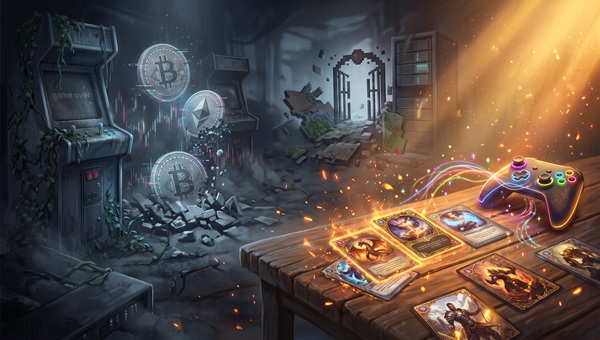
Players Push Back Against Speculation-First Design
These shutdowns triggered a candid reckoning among longtime supporters on November 8. Prominent gaming commentator Yellow Panther argued that too many teams chased quick capital through token rewards and NFT sales rather than crafting compelling mechanics, leaving dedicated fans stranded with worthless assets once servers went dark.
Fellow voices echoed the sentiment: commentator SafZ criticized studios for prioritizing whitepapers over entertainment, while creator Sky pointed out that an NFT cannot outlive the game it depends on—if a title shuts down or alters its rules, the asset’s utility vanishes.
Venture Capital Pullback Squeezes Development Budgets
Behind the closures lies a stark contraction in venture capital. According to Blockchain Game Alliance estimates, sector-wide investment dropped from over $10 billion at the height of the 2022 boom to just $293 million across 2025.
DappRadar data from the second quarter of 2025 underscored the downturn, showing funding down 93% year-over-year to $73 million while more than 300 gaming applications went dormant.
Even when capital flowed—such as the $129 million tracked in the third quarter of 2025—DappRadar noted that only 53% reached actual game developers, with the remainder absorbed by infrastructure.
While Galaxy Research logged 37 venture deals across the broader Web3, metaverse, and gaming landscape in the second quarter of 2026, direct studio funding remains tightly constrained.
Gameplay-Driven Titles Chart a Survival Path
Despite the broader shakeout, projects that treat blockchain as a secondary layer rather than the main attraction continue to operate.
Immutable-based card battler Gods Unchained rolled out its 87-card Reckoning expansion alongside an Instant Forge update in October 2026, maintaining free-to-play accessibility while keeping card trading intact.
For a sector searching for its footing, the takeaway from 2026 is clear: digital ownership only holds value when anchored to a game people genuinely want to play.


 eabungana@gmail.com

