














 Stellar Chosen for Massive DTCC Asset Tokenization
 Article Contributors


 Fact checked by
 Read Time: 2mins
 Published: 03/06/2026 | Updated: 03/06/2026


A Massive Leap Forward for Institutional Ledger Systems
Scheduled to debut in the opening half of 2027, the incoming program is designed to integrate seamlessly into existing regulatory parameters.
This technical pipeline will allow traditional securities to undergo rapid digitization without stripping away the essential investor guarantees, corporate rights, and compliance reporting frameworks that institutional fund managers require.
Rather than spinning up isolated private networks, this approach signals a decisive pivot toward open, multi-chain financial rails.
The Mechanics of On-Chain Asset Management
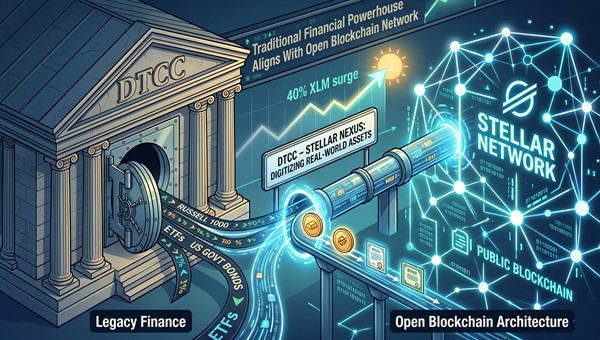
At the center of this integration is the Depository Trust Company (DTC), the subsidiary responsible for holding trillions of dollars in traditional securities. The strategy does not merely focus on minting brand-new digital native products; instead, it targets the backend infrastructure of existing legacy markets.
The pilot frameworks will focus heavily on liquid instruments, with plans to evaluate tokenized versions of components from major indices such as the Russell 1000, high-volume exchange-traded funds (ETFs), and a variety of short- and long-term United States government bonds.
Crucially, this system will automate complex administrative lifecycle processes. Corporate adjustments, distribution schedules, and multi-network collateral movements will all run through smart contract frameworks.
By shifting these manual operations onto digital rails, the financial sector aims to secure extended trading hours, drastically reduce settlement times, and unlock superior liquidity optimization across global markets.
Regulatory Clearances and Market Response
This bold architectural move was made possible following crucial regulatory clarity received late last year.
In December 2025, the United States Securities and Exchange Commission issued a decisive no-action letter, providing the clearing organization with the regulatory buffer needed to safely build and test this multi-chain model.
This clear regulatory backing ensures that compliance-heavy institutions can engage with public ledgers under a secure, government-vetted legal umbrella.
The broader digital asset ecosystem reacted with immediate enthusiasm to the news. Even as major digital currencies faced structural headwinds and geopolitical pressures that dragged down the wider market, Stellar’s native asset, XLM, decoupled completely from the trend.
The asset recorded a massive 40% surge in valuation, backed by a significant influx of trading volume. This dramatic price action underscores how deeply the market values genuine, high-scale corporate utility over mere speculative momentum.
An Era of Shared Financial Architecture
By selecting a public protocol known for its low transaction costs, immense throughput, and rigorous focus on financial compliance, legacy institutional operators are acknowledging that decentralized networks are mature enough to handle elite financial volume.
Moving forward, the objective focuses squarely on establishing deep interoperability. By blending fifty years of traditional post-trade settlement experience with highly efficient open-source infrastructure, this union is actively carving out the blueprint for the next generation of global capital markets.
While legacy institutions are securing traditional regulatory guardrails to safely build multi-chain models, Wall Street’s intersection with digital assets is simultaneously expanding into culturally driven, speculative retail vehicles, highlighted by recent spot exchange-traded fund filings submitted to the U.S. Securities and Exchange Commission.


 eabungana@gmail.com

