














 Inside The Ethereum Identity Crisis
 Article Contributors


 Fact checked by
 Read Time: 2mins
 Published: 02/06/2026 | Updated: 03/06/2026


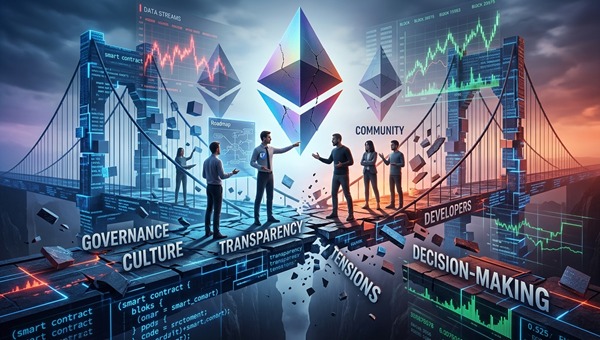
A Mass Exodus Sparks a Broader Debate
The friction surfaced clearly following a wave of talent flight, with eight prominent researchers and contributors parting ways with the organization since the beginning of 2026. This sudden drain of institutional knowledge intensified ongoing scrutiny regarding how the non-profit manages its vast resources and guides the ecosystem.
The core of the dispute centers on the organization’s overarching purpose. On one side are purists who believe the group should strictly fund neutral, public-goods research. On the other side are pragmatists who argue that the modern blockchain landscape requires a more agile, execution-focused body.
With massive economic livelihoods now permanently tied to the stability and performance of the network, critics argue that the non-profit’s traditional academic approach is growing increasingly disconnected from commercial realities.
Alternative ideas have already begun bubbling to the surface. Some former researchers have publicly proposed creating entirely new, separate entities backed by massive capital to focus strictly on commercial execution and maximizing value capture.
This directly challenges the classic, decentralized ethos that the original establishment has long championed.
The Stewardship Mandate and the “CROPS” Strategy
In an attempt to clarify its position, the organization published an internal guide and manifesto outlining its official role. The document explicitly reframed the institution not as a centralized ruler or parent company, but merely as a temporary custodian of the protocol.
Addressing the rising tide of pushback, co-founder Vitalik Buterin defended this philosophy, clarifying that the group was never meant to be the central authority of the network. Instead, he described it as just one node among many within a larger, interconnected system.
According to leadership, the decision to narrow the organization’s focus is deliberate.
By channeling its remaining resources into core principles—specifically censorship resistance, openness, privacy, and security (collectively referred to as the “CROPS” framework)—the institution is actively choosing long-term philosophical survival over broad market expansion.
Concurrently, technical teams remain tasked with pushing major protocol upgrades, including boosting the gas limit to 200 million and advancing zero-knowledge security standardizations.
What the Governance Friction Means for the Ecosystem
While the internal gridlock does not immediately impact daily token prices the way a regulatory ruling or an exchange-traded fund approval might, its long-term implications are substantial. A network’s ultimate strength relies heavily on developer retention, smooth coordination for upgrades, and institutional trust.
Ecosystem leaders note that while the organization is frequently criticized for being wasteful or ignoring the consumer application layer, its absolute neutrality remains its greatest asset. Having a non-partisan entity at the table is vital when competing development teams must unite around shared technical standards.
However, as rival layer-one blockchains aggressively court talent, prolonged uncertainty at the foundational level could weaken the network’s competitive edge, making governance clarity more urgent than ever.




 eabungana@gmail.com

