














 Hyperliquid Is Spending $10M to Retire USDH
 Article Contributors


 Fact checked by
 Read Time: 2mins
 Published: 30/06/2026 | Updated: 02/07/2026


Reversing the Quest for Independence
Hyperliquid originally launched USDH with grand ambitions of monetary autonomy. For a high-volume trading platform, operating an in-house dollar peg makes theoretical sense. It allows the underlying protocol to capture lucrative reserve yields, dictate settlement rules, and avoid relying on external payment rails.
It was a play for complete vertical integration.
Yet, managing a native stablecoin at scale introduces heavy operational burdens, compliance complexities, and systemic risks. Homegrown tokens must continuously fight for trust against dominant market incumbents.
In May, the math flipped. Hyperliquid pivoted away from USDH, announcing that the network’s financial baseline would return to USDC, the industry-standard stablecoin issued by Circle and Coinbase.
The decision was highly strategic. Under a revised agreement, Coinbase will channel approximately 90 percent of the reserve yield revenue generated on the network back into the Hyperliquid protocol.
By outsourcing the asset management and compliance headaches to a regulated titan, the chain secures a steady revenue stream while capturing the deepest liquidity pool in crypto.
Hard Deadlines for Ecosystem Developers
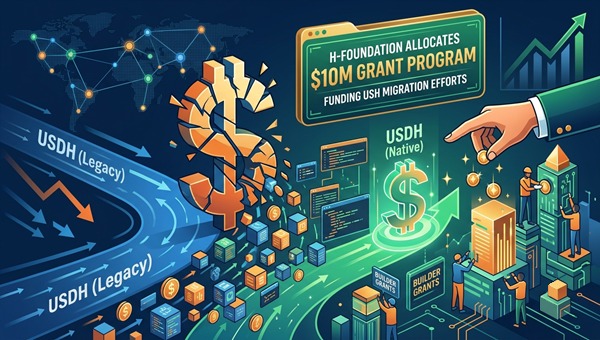
The $10 million fund is essentially the cleanup invoice for this structural U-turn.
The capital is designated for a broad spectrum of network participants, including HIP-1 and HIP-3 deployers handling spot and perpetual markets, HyperEVM protocols, bridge operators, and Native Markets—the entity that originally won a validator vote to issue USDH over prominent DeFi competitors.
For these teams, the transition requires an intense technical overhaul. Smart contracts must be rewritten, collateral parameters updated, and front-end user interfaces adapted to handle USDC. Without financial support from the foundation, many developers might choose to abandon the ecosystem entirely rather than spend uncompensated development hours unwinding their previous work.
Time is short. The foundation has mandated that all orderly shutdowns and migrations must be wrapped up before the end of July. End-users holding the sunsetting asset have until July 17 to execute conversions into USDC or fiat via the official dashboard, after which the USDH/USDC spot order book will be shuttered.
Realities of Blockchain Governance
Hyperliquid’s strategic retreat highlights a broader structural challenge across the digital asset sector. While the ideological dream of decentralized financial sovereignty remains compelling, the practical realities of scale frequently favor established network effects.
When billions of dollars are on the line, professional traders and institutional participants overwhelmingly prefer standard, regulated dollar pegs over experimental native alternatives.
Regulatory posturing also plays a critical role. With parent company interests moving toward public listings, maintaining a clean, predictable infrastructure anchored by a mainstream asset like USDC is far simpler to justify to traditional financial watchdogs than managing an internal minting mechanism.
Ultimately, Hyperliquid’s pivot proves that true sustainability in DeFi is rarely just a matter of tech infrastructure—it is fundamentally dictated by liquidity, regulatory compliance, and raw economic efficiency.


 eabungana@gmail.com

