














 JustLend DAO Debuts SBM v2
 Article Contributors


 Fact checked by
 Read Time: 2mins
 Published: 18/06/2026 | Updated: 19/06/2026


Decentralized Capital, Fully Segmented
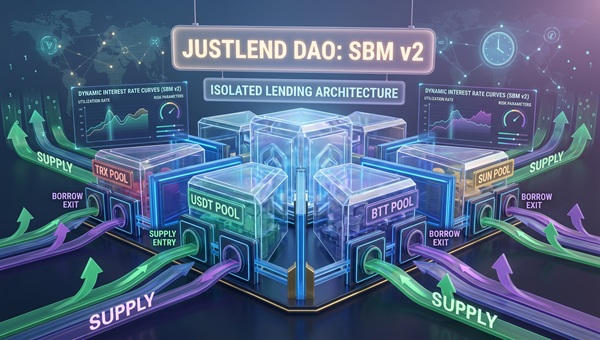
The core achievement of the SBM v2 rollout is its transition to a segregated, dual-layer operational setup consisting of Vaults and Markets. In the previous version, collateral pools were interdependent, exposing the entire protocol to vulnerability if a single asset collapsed or experienced a flash liquidation event.
Under the new infrastructure, depositors supply a single digital asset—such as the stablecoin USDT—into a decentralized vault. This Vault serves as a primary liquidity distribution hub, algorithmically channeling those assets into various distinct lending markets.
Liquidity providers earn combined returns accumulated from all interconnected pools.
Conversely, borrowers interact directly with separate, isolated markets. They pledge authorized collateral to take loans against specific positions.
Because each market operates with an isolated risk profile, localized market turbulence or unexpected liquidations are entirely contained, preventing economic contagion from ripple-effecting through the wider lending platform.
Adapting to Market Fluctuations in Real Time
Alongside this protective structural segmentation, the platform has deactivated its legacy Jump Curve system in favor of an adaptive curve interest rate model. Instead of calculating borrowing fees based on a rigid, unchanging utilization baseline, the entire interest rate mechanism now shifts organically.
When capital utilization in a particular market falls short of optimal levels, borrowing rates automatically drop to incentivize lending activity and drive up loan demand.
If demand spikes and capital becomes scarce, the model triggers a sharp upward shift in borrow rates to motivate users to pay down outstanding loans, successfully restoring immediate liquidity to the pool.
This dynamic approach ensures a smoother equilibrium between depositors and borrowers during volatile trading cycles.
Tailored Protective Barriers and Deflationary Trends
The upgraded architecture allows the protocol to enforce customized risk thresholds for each separate pool. Parameters like specific loan-to-value caps and liquidation penalties are managed independently for each asset type.
This granular approach ensures that a price crash in an experimental asset will not threaten the security of foundational stablecoin reserves.
This technical deployment coincides with a period of aggressive native token deflation for the protocol. In April 2026, the decentralized autonomous organization completed its third consecutive token buyback and burn initiative, fueled by net earnings from the first quarter of the year.
That single maneuver permanently destroyed 271.3 million JST tokens, valued at approximately $21.3 million at the time. To date, the project has permanently erased over 1.35 billion JST from the active market, eliminating roughly 13.70% of its initial aggregate supply to reinforce long-term network value.


 eabungana@gmail.com

