














 Emmer Rebuffs Federal Agency Crypto Warnings
 Article Contributors


 Fact checked by
 Read Time: 1mins
 Published: 25/05/2026 | Updated: 27/05/2026


Confronting Regulatory Gaps and Agency Jurisdiction
A primary concern voiced by federal investigators centers on how the legislation splits regulatory authority.
The bill seeks to transfer a significant portion of crypto oversight from the Securities and Exchange Commission (SEC) to the Commodity Futures Trade Commission (CFTC).
Law enforcement bodies have expressed anxiety that this jurisdictional shift might weaken current anti-money laundering mechanisms and complicate active investigations into digital asset crimes.
Emmer, a long-time advocate for the cryptocurrency industry, countered these claims by emphasizing that the bill modernizes the regulatory architecture rather than dismantling it. He argued that under the current patchwork environment, digital asset platforms operate without explicit federal guidelines.
By formalizing a nationwide framework, the legislation seeks to replace administrative ambiguity with concrete statutory obligations.
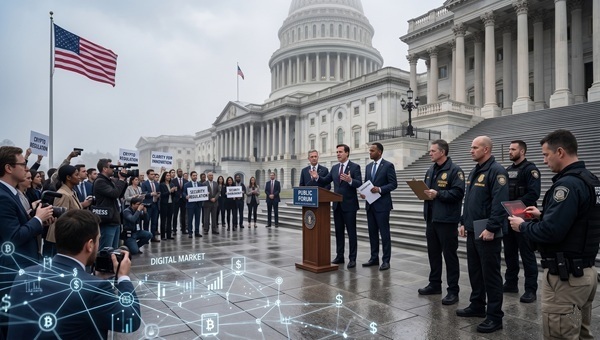
Enforcement Powers Kept Intact
Addressing the specific fears of federal agencies, Emmer insisted that the legislative changes would not strip away existing investigatory tools. He pointed out that the bill explicitly integrates digital asset brokers, commodity exchanges, and dealers into the Bank Secrecy Act framework.
This means that these platforms will remain legally bound by strict anti-money laundering (AML) protocols and know-your-customer (KYC) requirements. Furthermore, the lawmaker emphasized that the SEC retains its mandate to police fraudulent activities and market manipulation, even for digital commodities transacted via registered entities.
Rather than creating a permissive environment for illicit financing, Emmer asserted that the bill brings clarity to market participants, allowing compliant domestic businesses to expand while ensuring that bad actors remain fully within the reach of federal prosecutors.
The Path Forward in Congress
The debate underscores the deep friction between lawmakers pushing for economic innovation and agencies tasked with national security and financial policing. Despite the friction with law enforcement, the legislative package maintains notable momentum on Capitol Hill, building on its earlier bipartisan success in the House of Representatives.
As the legislation heads toward a full Senate vote, the dialogue is shifting toward finding a balance between fostering technological growth and maintaining robust mechanisms to intercept financial crimes.
For now, congressional leadership appears determined to advance the market structure changes, framing the initiative as a victory for both legal certainty and consumer protection.


 eabungana@gmail.com

