














 WU Stablecoin Launch
 Article Contributors


 Fact checked by
 Read Time: 2mins
 Published: 28/04/2026 | Updated: 30/04/2026


Bypassing the SWIFT Bottleneck
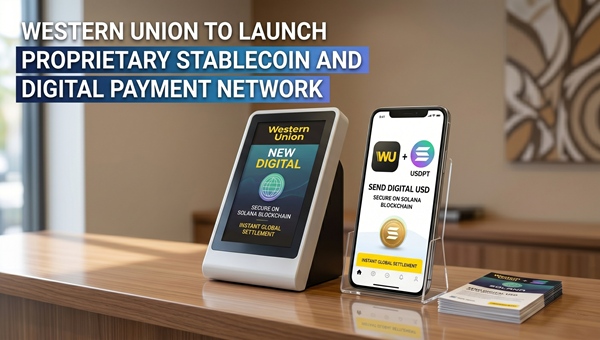
The centerpiece of this digital evolution is the U.S. Dollar Payment Token (USDPT). Unlike many digital assets designed for speculative trading, Western Union’s token is built for utility.
CEO Devin McGranahan revealed that the initial rollout, slated for May 2026, will focus on internal infrastructure.
By using USDPT as a settlement tool, the company aims to move money between its corporate treasury and its vast network of global agents without relying on the SWIFT interbank system. This transition addresses a long-standing friction point in cross-border finance.
Traditional bank transfers often take days to clear and are restricted by business hours and public holidays. By migrating these settlements to the Solana blockchain—selected for its high speed and negligible transaction costs—Western Union can achieve real-time liquidity management 24 hours a day, seven days a week.
A Three-Pronged Digital Strategy
The stablecoin is only one piece of a broader “Digital Asset Network” (DAN) that Western Union is currently activating. This network is designed to act as a bridge between the decentralized world of crypto wallets and the physical reality of local currency.
Through a unified API, third-party crypto wallet providers can now tap into Western Union’s retail footprint. This allows users to send digital tokens and have the recipient pick up physical cash at one of more than 600,000 agent locations worldwide, effectively providing an “off-ramp” for the unbanked.
To complement these backend improvements, the company is also readying a consumer-facing product: the USD Stable Card. Expected to debut later in 2026, this prepaid card will allow users to hold their balances in stablecoins while spending them at any merchant that accepts standard card payments.
Safeguarding Value in Volatile Markets
The strategic pivot toward dollar-backed digital assets is particularly relevant for the company’s customers in regions facing high inflation. In markets like Argentina and parts of Latin America, where local currencies often lose value rapidly, the ability to hold funds in a dollar-pegged digital format provides a critical safety net.
By partnering with Anchorage Digital Bank, a federally chartered institution, for the issuance of USDPT, Western Union is leaning into a regulated approach.
This ensures that while the technology is cutting-edge, the financial backing meets the stringent standards required for a global payments leader. As McGranahan noted, the conversation has moved past whether the company will embrace digital assets; the focus now is on how quickly this new ecosystem can scale to meet global demand.


 eabungana@gmail.com

