












 Ledger Nano S
 Article Contributors


 Fact checked by
 Read Time: 7mins
 Published: 14/05/2026 | Updated: 18/05/2026
Ledger Nano S Review
Overall Rating
88 %


The Ledger Nano S Overview
The original Ledger Nano S is considered Legacy Hardware. Ledger ceased all firmware and security maintenance for the Nano S in mid-2025.

Play Responsibly
Ledger Nano S Key Facts
✔️Time-Tested Security Architecture: It utilized a Certified Secure Element (CC EAL5+) chip, which remained the industry standard for protecting private keys against physical and remote attacks for over a decade.
✔️Zero Battery Maintenance: Because the device had no internal battery, it avoided the common swelling or degradation issues found in the Nano X, making it a reliable choice for long-term “deep storage.”
✔️Offline Air-Gap Integrity: Without Bluetooth or Wi-Fi capabilities, the device had a minimal attack surface, ensuring that private keys were only accessible via a physical Micro-USB connection.
✔️Cost-Effective Legacy Entry: During its production run, it was the most accessible high-security hardware wallet on the market, democratizing self-custody for millions of budget-conscious investors.
✔️Standardized Recovery Protocol: It fully supported the BIP-39 standard, meaning users were never “locked in” to Ledger hardware and could recover their funds on any modern hardware or software wallet.
❌Severe Memory Constraints: With only 320KB of storage, it became increasingly difficult to use as blockchain apps grew in size. By the end of its lifecycle, it could often only hold 2 to 3 apps at a time.
❌Outdated Connectivity: The reliance on Micro-USB is now considered obsolete, requiring users to keep legacy cables or adapters on hand for modern USB-C laptops and smartphones.
❌No iOS Mobile Support: Due to its lack of Bluetooth and Apple’s strict Lightning/USB-C data restrictions for legacy hardware, iPhone users were never able to manage their funds on the go.
❌Screen Longevity Issues: Many legacy Nano S units suffered from OLED screen “fading” or burnout over time, making it nearly impossible to read transaction details after several years of use.
❌Lacks Clear Signing Power: The hardware was not powerful enough to support the modern Clear Signing protocols required for complex DeFi and NFT interactions, often forcing users into Blind Signing, which is less secure.
❌End-of-Life Support: As of 2026, it no longer receives feature updates or support for newer blockchains, meaning it may eventually lose compatibility with the Ledger Live desktop app entirely.
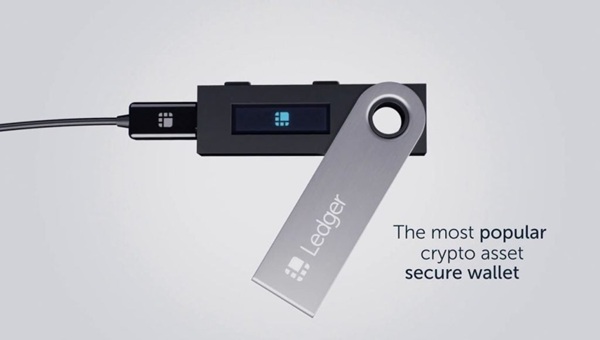
The Nano S was the hit that put the Ledger brand on the map. While it has been succeeded by newer models, here is a retrospective on the device that defined the first era of cold storage.
| Feature | Details |
|---|---|
| Type of Wallet | Hardware (Non-Custodial) |
| Status | Discontinued / Legacy Support |
| Historical Price | Between $59 and $79 |
| Port Type | Micro-USB (Now considered an outdated standard) |
User Interface
The interface relied on two physical buttons located on the side of the device. To confirm a transaction, users had to click both buttons simultaneously.
By today’s standards, the 128 x 32 pixel screen was incredibly small and lacked the brightness found on the newer S Plus or Nano X models.
Supported Tokens
While the Ledger ecosystem grew to support 5,500+ tokens, the Nano S hardware eventually reached a ceiling where it could no longer support the firmware requirements of newer, more complex blockchains.
- Primary Support: BTC, ETH, LTC, and XRP.
The Gap: Users often had to “shuffle” apps, deleting the Bitcoin app to make room for the Dogecoin app, though this never deleted the actual funds.
Backup & Restore
Backup was a core part of the Nano S architecture.
- Users relied on the 24-word recovery phrase generated at setup.
Because the Nano S used the industry-standard BIP-39 protocol, users could (and still can) migrate their funds to any other hardware wallet if the Nano S screen failed or the Micro-USB port broke.
Troubleshooting
Nano S Alternatives
Ledger Nano S Plus: The modern replacement that features a larger screen and 1.5MB of storage.
Ledger Nano X: The premium alternative that introduced Bluetooth and iOS compatibility.
Ledger Nano S Plus
4.3/5The Ledger Nano S Plus is a hardware wallet designed to provide secure and non-custodial management o…
Final Thoughts
The Ledger Nano S was a budget device that changed the industry. While it could not compete with the memory and features of modern wallets, it remains a testament to durable, high-security engineering.
For anyone still holding a Nano S in 2026, it is generally recommended to use it only as a backup and to upgrade to a device with clear signing capabilities for modern security.
Frequently Asked Questions
What should I do if my Nano S won’t turn on at all?
First, try a different Micro-USB cable and a different computer port. If it remains black, the hardware has likely reached its end-of-life. You must use your 24-word secret recovery phrase to restore your funds on a new hardware wallet.
Can I still update the firmware in 2026?
Yes, Ledger still hosts firmware files for the Nano S. However, the hardware is now limited to security-only updates and will not receive any new features or support for newer, memory-heavy blockchains.
Why can’t I see my coins after an update?
Updates sometimes clear the cache in Ledger Live. Your coins are safe. You simply need to click “Add Account” in Ledger Live and select the coin you are missing; the app will scan the blockchain and find your balance again.
Is the “Booting n%” screen a sign of a hack?
No. If you see “Booting 10%… 50%,” the device has detected an irregularity in the USB power or port and is running a self-diagnostic. Let it reach 100% (which can take several hours). If it resets, you will need your 24-word phrase to restore it.


 info@bitedge.com