





 Epstein Files Expose $3M Coinbase Crypto Links
  Article Contributors

 Fact checked by

Early Investment and the Coinbase Connection
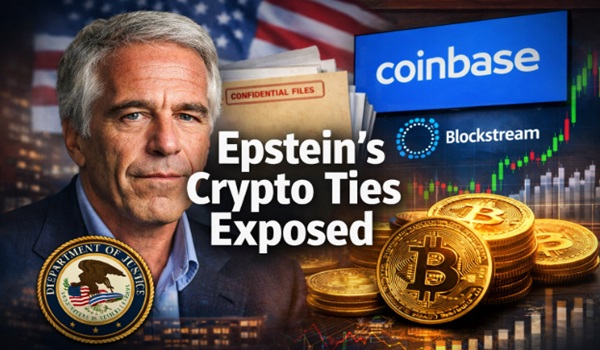
Epstein, known for his extensive network in finance and technology, invested roughly $3 million in Coinbase during the company’s 2014 Series C funding round, when the exchange was valued at about $400 million.
That stake represented less than 1% of Coinbase’s equity, but it has drawn widespread attention due to the disparity between his criminal background and involvement in a high-profile technology venture.
That round included traditional venture capital investors, angel backers, and strategic players who helped transform Coinbase into a global crypto powerhouse years before its 2021 Nasdaq debut with a multibillion-dollar valuation.
Epstein’s participation was executed through an entity he controlled, IGO Company LLC, based in the U.S. Virgin Islands. Correspondence in the DOJ release shows that Brock Pierce, a former Blockchain Capital managing partner and early crypto investor, facilitated the deal.
Emails cited in the DOJ files show Coinbase co-founder Fred Ehrsam was aware of the potential investment and discussed logistics with Epstein’s representatives. One message in the chain suggests Ehrsam was prepared to meet with Epstein, though records do not conclusively show such a meeting took place.
Profiting from the Crypto Boom
By 2018, as Coinbase’s valuation climbed toward $2 billion, internal discussions turned to an exit. Epstein reportedly sold half of his Coinbase position back to Blockchain Capital for about $15 million, generating a significant return on his original outlay.
The documents do not comprehensively detail the fate of the remaining stake through Coinbase’s maturation and eventual public listing, but if retained until the exchange’s IPO, the residual position would have appreciated further.
Unlike some rumors circulating on social media, the DOJ records on their own do not suggest that Epstein exerted operational control over Coinbase or had any governance role in the company.
They instead document the mechanics of early-stage investing in a nascent industry where venture capital networks and shared relationships often trump rigid vetting processes.
Ties to Bitcoin Infrastructure and Blockstream
Beyond Coinbase, the DOJ tranche of files also links Epstein to Blockstream, a prominent firm focused on Bitcoin protocol development and infrastructure. Emails from 2014 include communications involving Blockstream co-founders Austin Hill and Adam Back, and Joi Ito, then director of the MIT Media Lab.
Epstein participated in an $18 million oversubscribed seed round, with an allocation noted in the correspondence.
Blockstream’s current CEO, Adam Back, acknowledged the references on the social platform formerly known as Twitter, but he emphasized that Blockstream itself maintains no direct or indirect financial connection to Epstein or his estate. Back noted that Epstein was described in the emails as a limited partner in a fund affiliated with Ito, and that the fund’s interest was divested months later amid concerns over conflicts of interest.
The Blockstream disclosures have rippled through the broader Bitcoin development community. At least one respected developer has publicly called for leadership accountability in response to the revelations, underscoring how reputational risk lingers when controversial figures briefly enter influential circles, even indirectly.
Legacy of “Capital Hunger” and Oversight
The Epstein files arrive at a time when the crypto sector is under increased scrutiny from regulators and institutional investors alike. The industry’s early years, particularly between 2012 and 2015, were characterized by rapid innovation, loose regulatory oversight, and a premium on capital access over exhaustive background checks.
During that period, fundraising often occurred through offshore entities or intermediary vehicles, and cross-sector connections were leveraged to secure early bets on promising technologies.
Industry analysts describe the period as a “capital hunger” phase, where startups prioritized growth and market share in emerging decentralized finance markets. In that context, the presence of a controversial investor like Epstein was not unprecedented, though the renewed attention illustrates how historical financing decisions can become flashpoints in debates over ethics and governance in technology funding.
In public statements, Coinbase and the venture players named in the twilight of the DOJ disclosures have generally refrained from detailed commentary. Coinbase has expressed commitment to transparency and robust investor vetting in its more mature corporate posture, while other figures implicated indirectly have stressed historical distance and the absence of ongoing ties.
The disclosures also point to the importance of transparent record keeping and public disclosure requirements in venture markets that once operated with minimal external scrutiny.
As the digital asset sector increasingly merges with traditional financial systems, the echoes of early relationships,
such as those documented in the Epstein files, serve as both a historical record and a cautionary tale.


 eabungana@gmail.com
