





 El Salvador’s BTC Experiment Turns Toward Fiscal Reality
  Article Contributors

 Fact checked by

Voluntary Acceptance
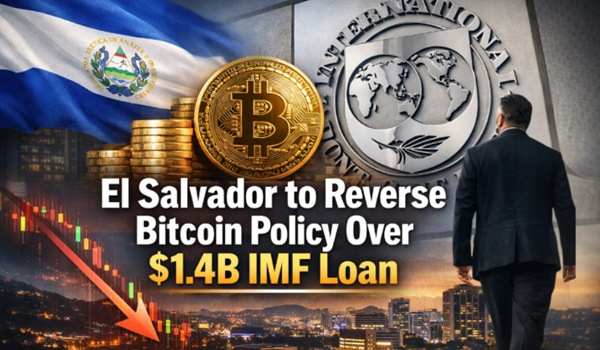
In a series of policy changes finalized in December 2025, El Salvador moved to remove the legal tender mandate for Bitcoin, making acceptance voluntary for businesses and eliminating obligations that had previously required merchants to take the cryptocurrency in transactions.
This change followed its ongoing discussions with IMF officials focused on financial risk mitigation and enhanced governance.
At the heart of this shift is a broader recognition by economic authorities that federally mandated Bitcoin use presented risks inconsistent with the stringent fiscal oversight expected by international lenders.
IMF country reports clearly outline that Bitcoin’s legal tender status was effectively rescinded as part of the conditions for financing, aiming to reduce macroeconomic and financial stability risks associated with extreme price volatility in digital assets.
Fiscal Discipline
The IMF has also secured commitments from San Salvador to limit public sector exposure to Bitcoin, including a prohibition on issuing Bitcoin‑indexed public debt and a requirement for transparent public reporting on digital asset holdings.
These terms, part of the continuous performance criteria under the EFF, reflect an institutional emphasis on transparency and fiscal discipline.
This recalibration of policy breaks sharply with the political narrative of earlier years, when then‑President Nayib Bukele championed Bitcoin as a tool for financial inclusion and economic modernization.
In 2021, El Salvador became the first nation to grant Bitcoin legal tender status alongside the U.S. dollar, a milestone that generated extensive global media attention.
Strategic Reserves
Despite the recent rollback of its mandatory usage, the government has not abandoned all Bitcoin initiatives. Public sector holdings of Bitcoin remain on El Salvador’s balance sheet, and authorities maintain a degree of strategic conviction in the asset’s long‑term potential.
Observers note that, even with the legal tender mandate removed, retaining sovereign Bitcoin reserves signals continuing interest in the cryptocurrency as a non‑traditional asset class.
The negotiations have also placed the status of the government‑run Chivo digital wallet under scrutiny. IMF officials have pressed for divestment or privatization of Chivo to reduce the fiscal footprint of state‑owned digital financial infrastructure and align supervision with international standards.
Although talks over a sale or restructuring remain in advanced stages, the outcome will be an important barometer of El Salvador’s future role in digital finance.
Global Precedent
Economic stakeholders in San Salvador acknowledge the delicate balance the government must maintain. On the one hand, the Bitcoin experiment elevated El Salvador’s international profile and sparked significant discourse on sovereign digital asset use.
On the other hand, the IMF financing is central to macroeconomic stabilization, budgetary support, and access to broader multilateral resources.
The lender’s focus on risk reduction stems from concerns that rapid or unfettered integration of volatile crypto assets could complicate monetary governance in a dollarized economy.
Independent assessments by non‑governmental organizations and analysts have highlighted additional challenges.
Adoption of Bitcoin among Salvadorans was limited despite initial enthusiasm: usage rates remained low in everyday transactions, and the footprint of state‑led digital financial infrastructure, like Chivo, faced questions over operational effectiveness and financial integrity.
These factors underscored why international lenders viewed adjustments to the original policy as necessary to safeguard broader financial stability.
Critically, IMF and El Salvador negotiators have continued to emphasize economic performance across other areas. New liquidity standards, banking reforms, and structural fiscal measures have been incorporated into broader conditionality alongside digital asset policy adjustments, reflecting a comprehensive approach to macroeconomic resilience.
For investors and global financial markets, El Salvador’s recalibration offers a cautionary tale about the interplay between innovation and institutional finance.
While the initial adoption of Bitcoin as legal tender was unprecedented, its rollback under IMF conditions reinforces the enduring influence of international fiscal norms and the constraints they impose on experimental monetary policies.
As the year closes, the Salvadoran government and IMF remain engaged in refining terms and finalizing reviews of the Extended Fund Facility program. The outcome could also shape how other nations approach cryptocurrency in sovereign policy frameworks moving forward.


 eabungana@gmail.com
