




 Do Kwon Gets 15 Years for Terra Fraud
  Article Contributors

 Fact checked by

The Illusion of Stability and the $40 Billion Collapse
Kwon built TerraUSD as an algorithmic stablecoin, promising it would maintain $1 value through code alone, with no reserves needed. Investors poured in billions, lured by yields hitting 20 percent on the Anchor platform. At its peak, the ecosystem topped $40 billion in value. But when the peg slipped in May 2021, Kwon publicly credited the algorithm for the recovery.
Behind the scenes, he had arranged secret buys worth millions from a trading firm to prop it up.
That hidden intervention masked deeper flaws. By May 2022, the system unraveled completely. TerraUSD fell below a penny, Luna hyperinflated, then crashed, erasing $40 billion to $50 billion in days. Ordinary people lost retirement funds; charities saw donations vanish. The judge called it fraud on an “epic, generational scale,” with harm rivaling few cases in federal history.
This event kicked off a brutal chain reaction.
- Crypto prices tumbled broadly, exposing overleveraged positions throughout the industry.
- Months later, FTX collapsed under its own fraud allegations, wiping out another $10 billion or more.
- Three Arrows Capital and Celsius Network subsequently declared bankruptcy, contributing to a market collapse that erased trillions in value.
Judicial Accountability and the Human Cost of Fraud
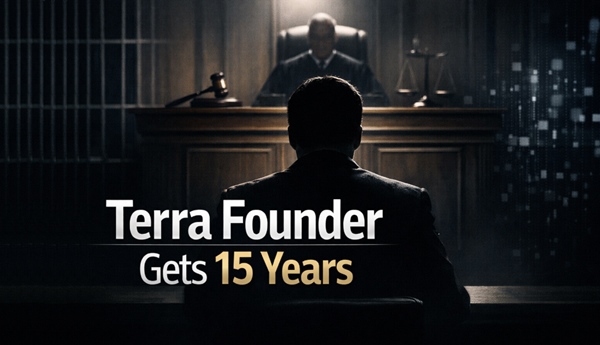
Kwon, 34, pleaded guilty in August to wire fraud and conspiracy. He forfeited $19.3 million and spoke remorsefully in court, saying he thinks daily about different choices. Yet the judge rejected prosecutors’ 12-year ask as too soft and the defense’s five-year plea as unreasonable, landing on 15 to deter future schemes.
Prosecutors charged Kwon with misleading investors about TerraUSD’s stability. Court records showed he claimed the system self-corrected through code alone, even after a 2021 depeg required secret interventions from trading firms to prop it up. These hidden supports created an illusion of resilience, drawing more capital into a fragile setup.
Kwon fled after the crash, evading authorities until his 2023 arrest in Montenegro on forgery charges. He was extradited to the US in late 2024 and pleaded guilty in August 2025. The plea cut the original nine charges but still carried a potential 25-year maximum.
At the December 11 sentencing, US District Judge Paul Engelmayer rejected prosecutors’ 12-year recommendation as too lenient and the defense’s five-year ask as inadequate. Victim statements poured in, over 300 in total, detailing lost life savings, delayed retirements, and deeper personal impacts.
One investor described years of work gone in weeks; others spoke of family strain from sudden debts.
Under the plea terms, he can seek transfer to South Korea after serving half the sentence, though separate charges there could add decades more.
Comparisons Across the Sector
Kwon’s 15 years falls between recent crypto sentences. Sam Bankman-Fried received 25 years for FTX’s multibillion-dollar fraud, reflecting direct theft from customer funds. Celsius founder Alex Mashinsky got 12 years for misleading lenders on risk and returns.
Unlike traditional stablecoins backed by cash reserves, Terra’s algorithmic model relied on market mechanics, amplifying vulnerability. Past incidents, like smaller hacks on bridges or rugs in DeFi, caused targeted losses, but Terra’s scale triggered systemic stress. The 2022 bear market that followed saw Bitcoin drop below $20,000 from highs above $60,000, with total crypto capitalization shrinking by over 70 percent.


 eabungana@gmail.com
