





 Tether’s Latin American Push Enters A New Phase
  Article Contributors

 Fact checked by

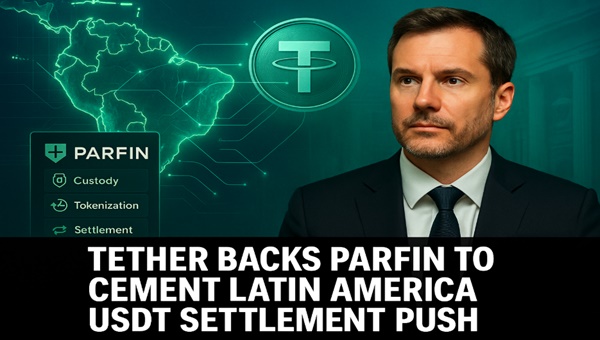
Tether Backs Parfin to Establish LatAm Settlement Hub
Announced on 20 November, the transaction positions Parfin as a regional hub for Tether’s plan to use USDT as a default settlement asset for high-value transfers. Fresh capital will help expand blockchain-based rails for cross-border payments, real-world asset tokenization, and institutional credit markets tied to trade finance and receivables.
Tether describes the transaction as a strategic investment rather than a full takeover and has not disclosed the size or valuation.
Founded in 2019, Parfin provides infrastructure that lets regulated institutions custody digital assets, issue tokenized instruments, and route transactions across multiple blockchains from a single interface.
Its software plugs into existing banking and treasury systems so that back office teams can treat token-based settlement as an extension of familiar workflows.
Parfin has operated in Brazil since 2020 and recently secured registration as a virtual asset service provider with Argentina’s financial regulator, giving it a foothold in two of the region’s most active crypto markets.
For Tether, that footprint shortens the path to deeper relationships with local banks, broker-dealers, and fintechs that want stablecoin exposure but must respect domestic rules on client onboarding, reporting, and capital flows.
In its announcement, Tether framed the investment as part of a plan to move institutional settlement off legacy correspondent banking networks and onto token-based infrastructure.
Parfin’s stack is designed to sit between core banking systems and public blockchains so that an institution can settle with USDT while still tracking positions, risk, and compliance inside existing ledgers.
Why Latin America Matters For USDT
Latin America has become one of the busiest regions for digital asset flows. Analytics firms estimate that crypto transaction volumes in the region have approached one and a half trillion dollars between 2022 and 2025, with a large share involving stablecoins used for savings, remittances, and hedging against currency volatility.
Against that backdrop, Tether has repeatedly described Latin America as a global powerhouse for blockchain innovation and a natural test bed for new settlement models.
For institutions in the region, the Parfin deal signals that Tether wants to move beyond retail usage and exchange trading into deeper integration with bank-grade infrastructure.
Instead of treating USDT as a trading chip, the plan is to position it as a settlement layer for cross-border trade, corporate treasury, and tokenized credit that can sit alongside existing payment rails.
That strategy is particularly relevant for Latin America, where regulators in markets such as Brazil and Argentina are creating licensing regimes for crypto service providers while demanding strict controls around know your customer, anti-money laundering, and cross-border capital movement.
A partner with local registrations and established relationships reduces the friction of bringing USDT into that environment.
Competition, Risk, and What’s Ahead
Tether is not alone in targeting the region’s institutional market. Circle, the issuer of USDC, has pursued partnerships with local fintechs and banks, and domestic players are building their own tokenization and settlement platforms.
Parfin has competed in that field for several years, pitching its multi-asset custody and tokenization tools to banks that want to test blockchain use cases without stepping into retail speculation.
The Tether investment gives Parfin a powerful backer and a clear commercial focus around USDT-based settlement.
It also raises policy questions. As USDT’s share of global stablecoins grows, regulators have become more vocal about concentration risk and the implications of relying on a single private issuer for dollar liquidity, especially in economies that already depend heavily on the United States currency.
For Latin American institutions, the calculus will be practical. If Parfin can deliver faster and cheaper settlement, clearer audit trails, and smoother access to tokenized assets, banks and corporates are likely to experiment, particularly in cross-border trade and receivables financing.
Over time, that could entrench USDT as the default on-chain dollar in the region and give Tether additional leverage in global financial negotiations.


 eabungana@gmail.com
