





 Trump Org Unveils Maldives Crypto Resort
  Article Contributors

 Fact checked by

Trump Brand Enters the Digital Age
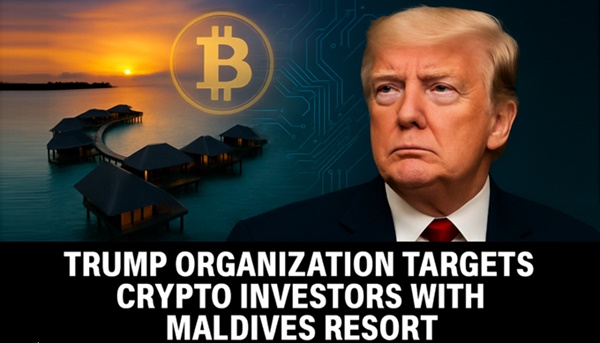
DarGlobal, a London-listed developer backed by Saudi Arabia’s Dar Al Arkan, announced the licensing deal this week. The project, still in early development, will carry the Trump brand across villas, hotel rooms, and residences on a private island cluster.
What sets it apart from every previous Trump-branded property is the plan to tokenize portions of the real estate and offer those digital tokens directly to U.S. investors, a structure that sidesteps traditional private-placement restrictions.
Investors will purchase tokens that represent fractional economic interest in the resort’s revenue-generating assets. Buyers acquire exposure to rental income and potential appreciation without taking title to specific units.
The tokens are expected to trade on a regulated digital exchange later in 2026 once the SEC grants the necessary approvals. Minimum investments start at levels accessible to accredited and, crucially, certain non-accredited U.S. investors under updated crowdfunding rules.
Sidestepping Restrictions
The Trump Organization has licensed its name to hundreds of projects worldwide since the 1980s, but it rarely takes equity positions anymore. After 2016, the company largely stepped away from new management contracts and focused on pure licensing deals.
This Maldives project fits that pattern: Trump provides the brand and design oversight; DarGlobal handles construction, financing, and operations.
Eric Trump, executive vice president, told reporters the structure reflects “where wealth is moving” and allows the brand to reach a younger, tech-savvy investor base that traditional real estate funds often exclude.
Tokenization of high-end property has gained traction since 2023. Aspen Digital sold $18 million in tokenized shares of the St. Regis Aspen in 2024, while a Dubai tower raised $400 million through similar instruments earlier this year.
The Maldives project, however, carries the highest-profile brand name yet attached to the model.
Maldives: A New Hub for Crypto Tourism and High-Tech Resorts
The Maldives has long catered to high-net-worth travelers, but it is increasingly attracting individuals connected to the crypto ecosystem. Several factors support the trend:
- Privacy and distance from regulatory noise in traditional markets.
- Favorable business partnerships with international developers.
- Growing regional investment from Middle Eastern and Asian funds that already maintain exposure to digital assets.
Tourism data from 2024 and 2025 also shows rising visitor numbers from crypto-dense markets such as the UAE, Singapore, South Korea, and Turkey.
This shift has encouraged multiple Maldivian developers to explore high-tech resort concepts, including digital-ID integration, crypto payment layers, and token-indexed loyalty systems.
The Maldives welcomed 1.9 million visitors in 2024, up 12 percent from pre-pandemic levels, with average nightly rates now exceeding $1,200. Supply remains tightly controlled, as only one new private-island resort lease is awarded per year.
Securities lawyers note that offering tokens to non-accredited U.S. investors requires either a full SEC registration or reliance on Regulation A+, a path that limits total fundraising to $75 million per year.
DarGlobal has not disclosed the size of the token tranche, though industry sources place the overall project cost north of $500 million.
Legacy Luxury Meets Blockchain
Construction is scheduled to begin in late 2026, with the first phase targeting completion in 2029. That timeline gives regulators ample opportunity to scrutinize the offering documents.
Shares of DarGlobal rose 8 percent in London trading the day after the announcement. Crypto-focused real estate platforms reported a surge in inquiries about Trump-branded investments, even though no tokens are available yet.
For the Trump Organization, the deal extends a brand that already spans golf courses from Scotland to Dubai and towers from Mumbai to Istanbul. Critics have long argued that licensing arrangements create perception risks with little direct financial upside.
Supporters counter that the model has generated hundreds of millions in fees with minimal capital commitment.
This project lands at a moment when cryptocurrency ownership in the U.S. has climbed above 20 percent of adults and political attitudes toward digital assets have shifted sharply.
Whether the marriage of a legacy luxury name with blockchain technology broadens the Trump brand’s reach or invites fresh scrutiny will become clear only when the tokens finally hit the market.


 eabungana@gmail.com
