





 Trump, XRP & The $100 Price Narrative: Market Realities
  Article Contributors

 Fact checked by

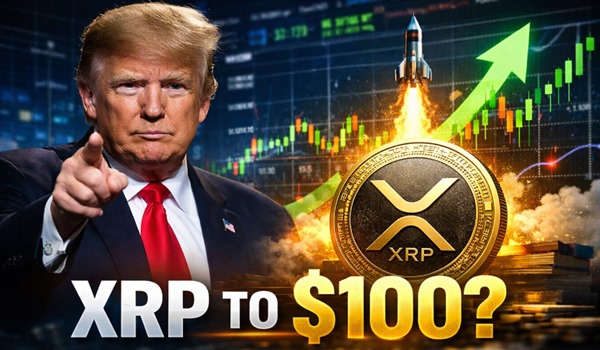
Political Winds and the “Crypto Capital” Vision
The speculation gained traction in early January 2026, when commentators linked Trump’s growing support for cryptocurrencies to bold price projections for XRP.
Throughout his campaign and into his second administration, Trump positioned himself as openly pro-crypto, vowing to turn the United States into the “crypto capital of the planet.”
Concrete policy signals followed. His administration moved to establish a crypto advisory council and floated the concept of a national strategic digital asset reserve, with XRP frequently mentioned among potential candidates.
Market Breakouts and Regulatory Relief
XRP’s recent market behavior adds fuel to the conversation. In mid-January 2026, the token broke decisively above $2.50, snapping out of a month-long consolidation range between $1.80 and $2.20.
The breakout aligned with a surge in institutional activity, as U.S.-listed spot crypto exchange-traded funds recorded their strongest inflows of the year.
Funds with XRP exposure attracted more than $500 million in a single week, while 24-hour trading volumes climbed to $3.1 billion. Much of that renewed confidence traces back to August 2025, when Ripple secured a partial victory against the Securities and Exchange Commission.
The ruling clarified that XRP is not a security when traded on secondary markets, lifting a regulatory cloud that had weighed on prices since late 2020.
The Daunting Math of a $100 Valuation
Analysts see these developments as meaningful tailwinds, though the math behind a $100 XRP remains daunting. With roughly 60.8 billion tokens in circulation and a hard cap of 100 billion, XRP currently carries a market capitalization near $119 billion, ranking fifth among cryptocurrencies.
A move to $100 would imply a valuation approaching $6 trillion based solely on circulating supply. That figure would eclipse today’s entire crypto market, estimated at $3 trillion, and dwarf Bitcoin’s late-2025 peak market cap of $1.8 trillion.
- By comparison, global equity markets are valued at around $120 trillion. Closing that gap would require extraordinary adoption.
History offers both encouragement and caution. XRP reached its all-time high of $3.65 in January 2018 during the last major bull cycle, buoyed by partnerships with institutions such as American Express and Santander. Those alliances showcased XRP’s utility in remittances and settlement.
Momentum unraveled soon after, as regulatory pressure mounted and the SEC lawsuit triggered widespread exchange delistings. Prices sank below $0.20 by 2022. The recovery began in mid-2023, when a court ruling sparked a rapid 150% rally by confirming that secondary sales did not constitute securities offerings.
Under a more accommodating regulatory climate in 2025, XRP briefly reclaimed the $3 level in July, marking its strongest performance in seven years.
Global Utility vs. Geopolitical Risk
Recent macro tensions have further tested XRP’s durability. Trump’s threat to impose 100% tariffs on certain allies, amid disputes involving Greenland and trade alignment, pushed broader markets into risk-off mode.
Bitcoin slipped below $93,000, while Ethereum dropped 3% over the past week. XRP, by contrast, declined just 4.5% over the same period.
Supporters point to Ripple’s emphasis on real-world use cases, particularly asset tokenization and remittances in emerging markets. Expansion across Africa and Latin America in 2025 positioned XRP to serve corridors where annual remittance flows exceed $150 billion, cutting transaction costs by as much as 60% compared with legacy systems like SWIFT.
Skeptics remain unconvinced by the $100 narrative. Forecasts published by expert panels such as Finder in mid-2025 placed XRP closer to $2.80 by year-end and $5.25 by 2030, reflecting steady adoption rather than exponential growth. More aggressive projections exist.
Former Goldman Sachs analyst Dom Kwok has suggested XRP could reach $1,000 by 2030, but only if it captures a meaningful share of the $10 trillion-per-day foreign exchange market.
More practical upside scenarios hinge on expanded ETF approvals and deeper integration with central bank digital currency pilots, where Ripple’s infrastructure has already been tested in more than 20 countries.
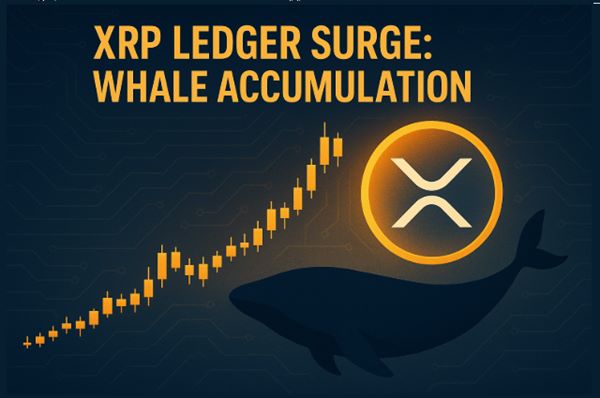
On-chain data shows a spike in whale activity, including one large holder maintaining a $75 million long position despite recent volatility. In derivatives markets, open interest has climbed to $1.2 billion, a 20% increase from last month, signaling growing expectations of price swings.
Ultimately, XRP’s path forward will depend on regulation, adoption, and geopolitics. Further easing of regulatory barriers under Trump’s administration, particularly through initiatives like a crypto reserve, could reinforce bullish momentum. At the same time, tariffs and global tensions present clear risks, with some forecasts capping gains near $4 in 2026.
XRP’s story underscores a familiar crypto truth:
political headlines can ignite rallies, but lasting value is built on utility, scale, and execution.



 eabungana@gmail.com
