














 $71 Million in ETH Freeze after KelpDAO Breach
 Article Contributors

 Read Time: 2mins
 Published: 21/04/2026 | Updated: 22/04/2026


A High-Stakes Exploit
The crisis began on April 18, when an attacker identified a critical vulnerability within KelpDAO’s cross-chain bridge infrastructure. While the protocol utilizes LayerZero for messaging, subsequent forensic audits by security firms such as D2 Finance clarified that the underlying LayerZero technology remained sound.
Instead, the breach was attributed to an “OApp peer-trust” bug. This specific flaw allowed the malicious actor to seize control of a KelpDAO peer contract, leading to the unauthorized minting and siphoning of 116,500 rsETH tokens—nearly one-fifth of the entire circulating supply.
While the total drain across various platforms reached a staggering $292 million, a substantial portion of the illicitly obtained funds was moved to the Arbitrum One network. It was this specific stash that became the target of the Security Council’s emergency response.
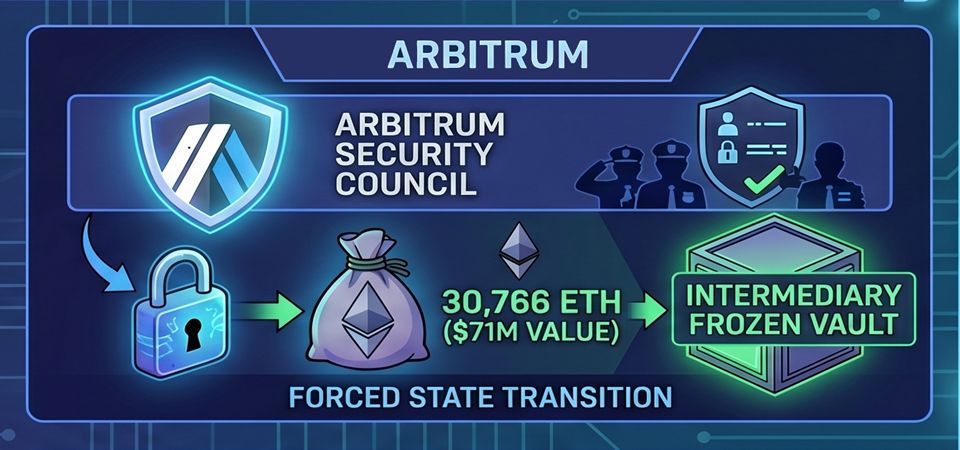
The Mechanism of the Freeze
Executing the freeze required a sophisticated technical maneuver known as a forced state transition. Completed at 11:26 PM ET on April 20, this action bypassed the need for the original wallet holder’s signature, effectively relocating the assets to a governance-controlled “vault.”
Arbitrum officials confirmed that the decision was informed by insights from law enforcement agencies regarding the suspected identity of the hacker.
Crucially, the council emphasized that this was a surgical operation. The freeze did not disrupt the broader Arbitrum ecosystem, ensuring that regular users and decentralized applications continued to function without interference.
The recovered ETH is now effectively in “escrow,” awaiting further governance votes and coordination with affected stakeholders to determine the next steps for restitution.
Systemic Aftershocks and DeFi Contagion
The impact of the KelpDAO hack extended far beyond its own smart contracts. Because rsETH was widely utilized as collateral on premier lending platforms like Aave and Compound, the sudden collapse of its value triggered a liquidity crunch.
Aave, in particular, witnessed its total value locked (TVL) plummet by over $6.6 billion in just 48 hours.
As panic spread, withdrawal requests on Aave surged to $5.4 billion within hours. The demand for liquidity became so acute that the WETH market hit 100% utilization, leaving many depositors temporarily unable to withdraw their funds.
This “domino effect” highlighted the inherent risks of DeFi composability, where a single point of failure in a restaking protocol can jeopardize the solvency of the entire lending market.
A New Standard for On-Chain Governance?
Arbitrum’s intervention has reignited the debate over the balance between decentralization and security. While the ability to freeze assets is often viewed with skepticism by proponents of absolute censorship resistance, the recovery of 25% of the stolen funds provides a compelling argument for emergency administrative powers.
As the industry grapples with two massive exploits totaling over half a billion dollars in a single month, the precedent set by the Arbitrum Security Council may serve as a blueprint for how networks react to catastrophic events in the future.
For now, the $71 million remains under lock and key, serving as a rare silver lining in an otherwise dark chapter for the DeFi sector.



 eabungana@gmail.com

