





 Crypto News – Weekly Recap – February 13, 2026
  Article Contributors

 Fact checked by

The Bigger Picture
Taken together, this week’s stories reveal a market caught between control and experimentation. Governments like China are tightening their grip, investors are grappling with volatility and broken assumptions, and builders are pushing boldly into AI-powered futures.
Crypto in 2026 is no longer just about price; it’s about regulation, infrastructure, autonomy, and trust. And as this week showed, all of those forces are colliding at once.

China Draws a Hard Line on Yuan Stablecoins
The most consequential policy move came out of Beijing. China’s central bank, the People’s Bank of China, alongside several other regulators, issued a sweeping ban on unapproved yuan-pegged stablecoins and most forms of tokenized real-world assets.

The message was unambiguous: any private digital asset that could resemble legal tender or weaken capital controls is now firmly off-limits, even if issued offshore by Chinese-linked firms. The move closes loopholes that had allowed limited exposure to yuan-linked crypto products and reinforces China’s long-standing preference for centralized control through its state-backed digital yuan.
While yuan-pegged stablecoins remain tiny compared with dollar-based giants, the ban signals that China is doubling down on monetary sovereignty, even if it means isolating itself further from global crypto innovation.
Dogecoin Defies the Slump as Whales Make Their Move
In an otherwise bruising market, Dogecoin staged a surprise comeback. A $20 million whale transfer to Robinhood triggered a sharp rebound, sending DOGE up roughly 6% in a single session and briefly reclaiming the $0.10 level.

On-chain data showed rising active addresses and renewed whale accumulation, suggesting strategic positioning rather than panic selling. Still, the rally came with caveats. Liquidity has thinned, volatility remains elevated, and Dogecoin’s long-term outlook continues to hinge on broader market sentiment and real-world utility rather than memes alone.
The episode was a textbook reminder that in crypto, large holders can still move prices dramatically, especially during periods of fear and low market depth.
Sam Bankman-Fried Pushes for a New Trial
The legal aftershocks of the FTX collapse returned to the spotlight. Sam Bankman-Fried filed a motion seeking a new trial, arguing that newly presented evidence shows FTX was solvent at the time of its collapse and that key testimony was improperly excluded.

The filing followed the collapse of his pardon strategy after former President Trump publicly dismissed the idea. Bankman-Fried now claims the crisis was a liquidity crunch rather than fraud, pointing to the bankruptcy estate’s strong creditor recoveries as indirect support.
Legal analysts remain skeptical. Rule 33 motions rarely succeed, and prosecutors’ original case focused on intent and misuse of customer funds, not just balance-sheet outcomes. Still, the move ensures the FTX saga remains alive in courts and in public debate.
Bitcoin Wobbles as $50,000 Warnings Grow Louder
Market anxiety intensified as Bitcoin suffered its sharpest single-day drop since 2022 before stabilizing in the mid-$60,000 range. On-chain data pointed to rising exchange inflows, weakening long-term holder conviction, and declining realized profits.
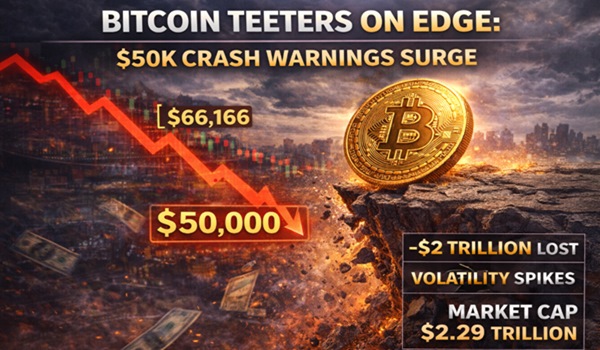
Analysts increasingly warn that a failure to hold key support could open the door to a deeper slide toward $50,000. What’s different this time is the narrative shift: the traditional four-year halving cycle is being questioned, as institutional participation, ETFs, and macroeconomic pressures blur historical patterns.
Whether this is a painful reset or the start of a prolonged bear phase remains unresolved—but confidence has clearly been shaken.
Coinbase Bets Big on AI Agents
Looking beyond short-term price action, Coinbase unveiled one of the week’s most forward-looking developments: Agentic Wallets designed for autonomous AI agents. These wallets allow AI systems to hold crypto, trade, earn yield, and pay for services without human intervention.

The launch underscores a growing belief that crypto could become the native financial layer for machine-driven economies.
While the announcement was met with mixed market reaction and renewed regulatory questions, it highlights a powerful trend: the convergence of AI and blockchain is accelerating, and major players are positioning early.


 eabungana@gmail.com
