





 Dubai Bans Monero, Zcash as DIFC Tightens Crypto Rules
  Article Contributors

 Fact checked by

Tighter Restrictions on Anonymity and Privacy Tools
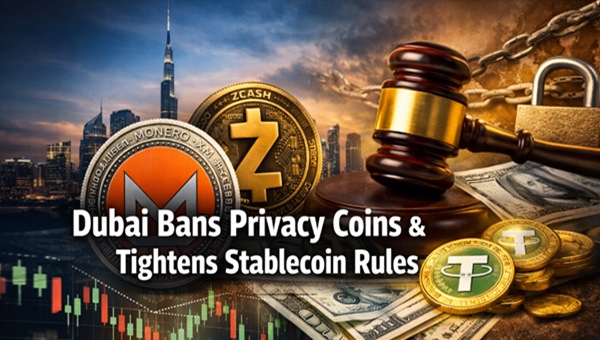
The ban targets privacy-focused cryptocurrencies, officially termed anonymity-enhanced cryptocurrencies by some interpretations, that obscure transaction histories, sender and receiver details, and holder identities. Monero (XMR) and Zcash (ZEC) are primary examples.
Regulated firms in the DIFC—banks, asset managers, exchanges, custodians, and platforms offering trading, promotion, fund management, or derivatives—can no longer list, trade, hold, or facilitate these tokens. The prohibition extends to privacy tools such as mixers, tumblers, and other obfuscation services that hide transaction trails.
Individual residents may still hold these assets in private wallets, but regulated entities face a complete block.
DFSA officials explained the rationale clearly. Privacy features make it nearly impossible for firms to meet Financial Action Task Force (FATF) standards, which demand identification of transaction originators and beneficiaries to combat money laundering and sanctions evasion.
Elizabeth Wallace, associate director for policy and legal at the DFSA, emphasized that engaging with such tokens would prevent compliance with core anti-money laundering and financial crime rules. This stance aligns the DIFC with global norms and addresses risks that anonymized transactions pose to market integrity and investor protection.
The update brings the DIFC in line with mainland Dubai’s rules. The Virtual Assets Regulatory Authority (VARA), which oversees crypto outside the DIFC, imposed a similar ban on privacy tokens in February 2023. That earlier restriction already prohibited anonymity-enhanced assets for licensed providers in most of Dubai.
The DFSA’s January 2026 changes unify the emirate’s approach, creating a consistent regulatory environment across jurisdictions.
This harmonization reflects broader UAE efforts to strengthen financial oversight while maintaining appeal to institutional players.
Redefining Stablecoins and Collateral Standards
Alongside the privacy ban, the DFSA narrowed its definition of stablecoins. The framework now recognizes only “fiat crypto tokens”—assets pegged to fiat currencies like the US dollar or euro, backed by high-quality, liquid reserves held in the reference currency, and capable of full redemption even under stressed conditions.
Algorithmic stablecoins, which rely on market mechanisms or derivatives rather than direct fiat collateral, no longer qualify.
Tokens like Ethena’s USDe fall into the general category of crypto tokens. They remain permissible but face the same suitability requirements as other assets, without the lighter regulatory treatment afforded to fully backed stablecoins.
This redefinition aims to reduce confusion and enhance redeemability.
Regulated stablecoins such as Circle’s USDC and EURC continue to operate under the framework, as does Ripple’s RLUSD, which has grown rapidly since launch. The changes prioritize stability and transparency for assets used in payments or as stores of value.
A Shift Toward Firm-Led Token Assessment
A key structural shift accompanies these restrictions. The DFSA eliminated its previous prescribed list of recognized crypto tokens, which once included names like Bitcoin and Ethereum. Licensed firms now bear responsibility for assessing token suitability.
They must evaluate factors such as governance transparency, AML compatibility, token purpose, trading history, and market liquidity, then document and maintain ongoing reviews.
This firm-led model, shaped by industry feedback during an October 2025 consultation, allows faster adaptation to market developments while placing greater accountability on operators. The regulator focuses on enforcing standards rather than pre-approving individual assets.
Global Alignment and Compliance Outlook
The timing of the announcement drew attention. Privacy tokens had seen renewed market interest in late 2025, with Monero climbing to new highs, reaching around $688 in recent trading, and Zcash posting significant gains.
The ban arrived just as these assets outperformed broader crypto trends, underscoring the tension between privacy innovation and regulatory demands.
Globally, the DFSA’s approach mirrors trends elsewhere. The European Union’s Markets in Crypto-Assets (MiCA) regulation effectively excludes privacy coins from regulated markets and plans to ban anonymous transfers starting in 2027. Jurisdictions like Hong Kong maintain risk-based regimes that theoretically permit privacy tokens under strict conditions, though practical listings remain challenging.
Dubai’s framework positions the city as a hub for compliant, traceable digital assets, appealing to institutions wary of regulatory gray areas.
Licensed firms now face immediate compliance tasks. Platforms must delist privacy tokens, update product offerings, and bolster internal controls. The changes demand more robust risk frameworks but offer opportunities for those meeting high standards to operate efficiently in a prestigious financial center.
A DFSA webinar scheduled for January 27, 2026, will provide further guidance on the updated rules.





 eabungana@gmail.com
