





 Bankman-Fried Seeks Retrial in FTX Fraud Case
  Article Contributors

 Fact checked by

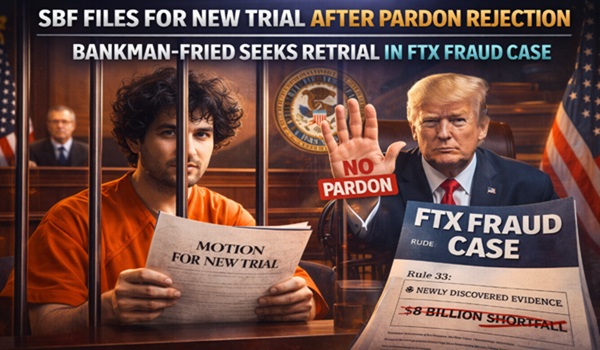
The Rule 33 Motion: A New Legal Gambit
The motion, submitted by his mother, retired Stanford Law professor Barbara Fried, invokes both Rule 33 of the Federal Rules of Criminal Procedure, which allows new trials when justice requires it, often due to fresh evidence, and the Due Process Clause.
Bankman-Fried claims testimony from former FTX executives like Daniel Chapsky (former head of data science) and Ryan Salame, who did not testify at his 2023 trial, would refute the government’s core insolvency argument.
Declarations attached to the filing, including one from Chapsky, support the view that FTX and Alameda Research maintained positive net asset values on the November 2022 bankruptcy petition date.
He also accuses the Department of Justice under the prior administration of pressuring or silencing witnesses, withholding exculpatory information, and contributing to what he calls a politically motivated prosecution.
Challenging the Narrative of Insolvency
This filing stands separate from his ongoing Second Circuit appeal, argued in November 2025, which challenges trial procedures, evidentiary exclusions, and Judge Lewis Kaplan’s conduct.
The new motion centers on solvency: Bankman-Fried asserts FTX’s net asset value was a positive $16.5 billion as of the petition date, framing the collapse as a short-term liquidity crisis during crypto winter, sparked by a massive bank run, failed leveraged bets at Alameda, and rapid withdrawals, rather than deliberate fraud involving stolen customer funds.
Prosecutors convicted him on seven counts, including wire fraud and conspiracy, after jurors heard evidence of $8 billion in customer deposits diverted to cover Alameda’s losses amid Bitcoin’s plunge from near $69,000 to below $20,000.
Bankman-Fried has amplified these points from FCI Terminal Island via his proxy-managed X account.
On February 10 and 11, 2026, posts echoed the motion, declaring, “FTX was never bankrupt. I never filed for it,” blaming lawyers for a rushed Chapter 11 filing to generate fees and alleging DOJ threats to witnesses that prevented key testimony.
The Pardon Push and Diminishing Political Odds
Earlier threads, including a January 30 post, highlighted his 2022 Republican donations (around $13 million) and praise for Trump’s crypto policies, part of an apparent pivot to build political goodwill amid the pardon push.
The pardon effort began in earnest after his March 2024 sentencing to 25 years, which was far below the potential 110 years prosecutors sought. Family and allies reached out to Trump-connected figures starting in early 2025, seeking exoneration.
Trump recently dismissed the idea in the NYT interview, listing Bankman-Fried alongside Sean Combs and Nicolás Maduro as figures he would not help.
Prediction markets like Kalshi and Polymarket had placed odds below 20-25% even before the statement, reflecting skepticism over any clemency for high-profile white-collar convictions.
The Creditor Recovery Story: 118% Repayment
FTX’s bankruptcy estate, led by John Ray III, tells a different recovery story. Distributions to creditors began in May 2025 under the confirmed Chapter 11 plan, with initial rounds delivering billions and cumulative payouts exceeding $7 billion by late 2025.
The approved plan promises 118-119% recovery for most creditors based on November 2022 dollar values, with the next major distribution scheduled for March 31, 2026, and disputed claims reserves recently reduced by $2.2 billion to unlock additional funds.
This substantial recovery, driven by appreciation in estate-held assets such as Solana tokens and Anthropic stakes amid broader crypto market growth, lends some support to Bankman-Fried’s argument of no permanent loss to customers.
Critics, however, maintain that recoveries do not erase the intent to defraud at the time of the collapse, since the prosecution centered on deliberate commingling and misuse of funds during the crisis.
Legal Analysts: A Steep Climb to Acquittal
Our legal analysts view the Rule 33 motion as a steep climb. Such requests succeed in under 5% of cases post-conviction, requiring proof that the evidence is truly new, material, and likely to yield acquittal on retrial.
Prosecutors built their case on intent via insider testimony from Caroline Ellison and others, showing deliberate diversion of funds for Alameda trades.
Solvency arguments were limited at trial due to evidentiary rulings, and post-collapse asset growth from market recovery may not sway courts on 2022 conduct or overcome the high bar for relief.
This move could be interpreted more as a public reframing and pressure tactic than a high-probability win, potentially delaying finality for creditors while reviving debate on trial fairness, witness handling, and crypto’s regulatory scrutiny.
Bankman-Fried’s push keeps the FTX saga alive, testing whether new angles can alter a verdict that reshaped industry trust and highlighted risks in centralized exchanges.


 eabungana@gmail.com
