





 Trump Dismisses Pardon Talk for Convicted FTX Founder
  Article Contributors

 Fact checked by

The Spectacular Rise and Fall of FTX
Bankman-Fried’s case is a reminder of the perils of unchecked crypto growth. FTX launched in 2019 as a derivatives and spot trading platform, rapidly scaling to a $32 billion valuation by 2021 with endorsements from celebrities and venture firms.
Executives secretly directed customer deposits to Alameda Research, the hedge fund managed by Bankman-Fried’s close associates.
When liquidity dried up in November 2022, FTX halted withdrawals, revealing an $8 billion hole in its balance sheet. Bankruptcy filings exposed commingled funds used for luxury purchases, political contributions, and speculative investments.
Federal prosecutors in Manhattan built a tight case. Bankman-Fried faced charges of wire fraud, securities fraud, and conspiracy, accused of diverting deposits to prop up Alameda and fund personal ventures.
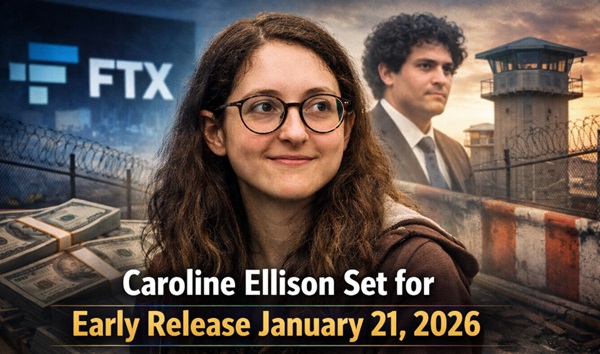
A jury convicted him on seven counts in November 2023 after a monthlong trial that featured testimony from ex-lieutenants like Caroline Ellison, who detailed the scheme’s mechanics.
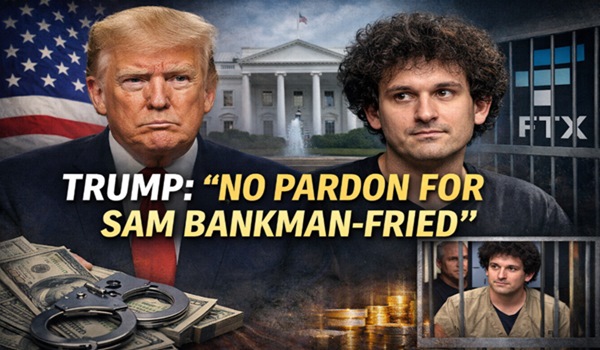
Judge Lewis Kaplan imposed a 25-year sentence on March 28, 2024, citing the deliberate betrayal of trust and ordering $11 billion in forfeiture. Prosecutors had pushed for 40 to 50 years, emphasizing the fraud’s scope, affecting over a million users worldwide.
Lobbying for Clemency from Behind Bars
From his cell at the Metropolitan Detention Center in Brooklyn, Bankman-Fried has maintained innocence while appealing the verdict.
He shares the facility with rapper Sean Combs, whom Trump dismissed for pardon consideration in the same interview.
Associates relay Bankman-Fried’s writings to X, where he has praised Trump’s December 1, 2025, pardon of former Honduran President Juan Orlando Hernández on drug trafficking convictions. These gestures seemed intended to gain favor, along with a media campaign that included an interview with Tucker Carlson from jail.
Bankman-Fried’s parents, Stanford professors Joseph Bankman and Barbara Fried, quietly lobbied Trump’s associates for months, enlisting lawyers to pitch their son’s value to society. These efforts echoed his pre-collapse persona as an effective altruism advocate, but they collided with his political record.
Campaign finance data shows Bankman-Fried funneled $5.2 million to Joe Biden’s 2020 bid and over $40 million to Democratic committees in 2022 through entities like Protect Our Future PAC.
That alignment likely factored into Trump’s stance, as the president has framed many pardons as corrections to perceived partisan prosecutions.
A Selective Pro-Crypto Pardon Strategy
Contrast this with Trump’s clemency for other crypto players. In January 2025, he freed Ross Ulbricht after 11 years served of a life sentence for operating Silk Road, a dark web site that enabled $1 billion in anonymous drug trades using Bitcoin. Crypto libertarians hailed it as a way to end overreach.
- March 2025 brought pardons for BitMEX co-founders Arthur Hayes, Benjamin Delo, Samuel Reed, and Gregory Dwyer, who were convicted in 2020 for anti-money-laundering lapses without customer theft.
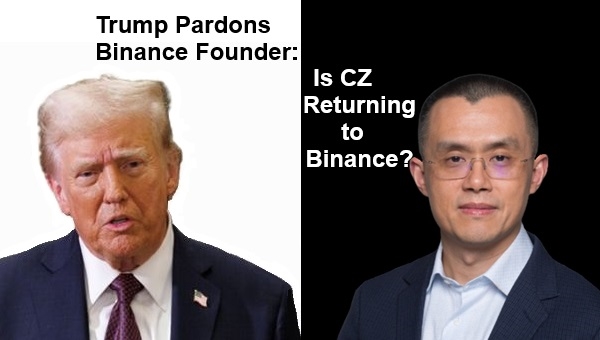
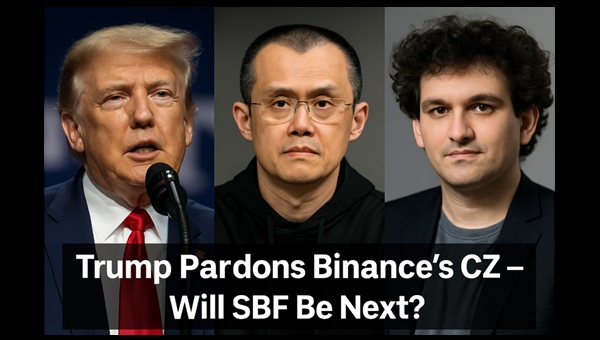
- In October 2025, Trump pardoned Binance founder Changpeng Zhao, who pleaded guilty in 2023 to money laundering, served four months, and paid a $50 million fine, amid Binance’s $4.3 billion settlement.
These moves fit Trump’s pivot to crypto advocacy. He promised during his 2024 campaign to fire SEC Chair Gary Gensler and create a national Bitcoin stockpile.
Family-linked ventures, including World Liberty Financial, backed by $2 billion from Binance interests, underscore his ties. Yet Bankman-Fried’s direct pilfering of deposits sets him apart from regulatory tangles.
Victims lost retirement accounts and homes, though the FTX estate under John Ray III has recovered assets through asset sales and clawbacks.
By late 2025, $7.1 billion had reached creditors, with small claims under $50,000 repaid at 119%, including interest.
Additional distributions are scheduled for early 2026, potentially achieving a 118% overall recovery according to the approved plan.
The Limits of Mercy in the Digital Age
The denial signals boundaries in Trump’s approach. While he champions blockchain as economic freedom, outright theft crosses into unforgivable territory. Bankman-Fried’s saga warns startups of governance pitfalls, even as the industry rebounds with Bitcoin projected to tower $150,000 in 2026.
His appeal, focusing on evidentiary issues and sentencing, offers a slim path forward.
For now, Trump has decided against mercy, emphasizing accountability in his push for regulated innovation.


 eabungana@gmail.com
