





 Crypto News – Weekly Recap – February 28, 2026
  Article Contributors

 Fact checked by

SEC Slashes Stablecoin Capital Charge to 2%, Opening Door for Institutions
The most structurally important change came from accounting rules rather than new legislation. The U.S. Securities and Exchange Commission reduced the capital haircut applied to certain dollar-backed stablecoins held by broker-dealers from 100% to just 2%.

Previously, regulated firms effectively could not hold stablecoins. Every dollar required equivalent regulatory capital, turning blockchain dollars into unusable assets regardless of backing quality.
The updated treatment places qualifying payment stablecoins much closer to cash equivalents inside trading books.
The practical effect is significant. Broker-dealers can now use stablecoins for settlement, collateral movement, and client balances without distorting capital ratios. Activities like cross-market arbitrage and tokenized securities settlement become operationally feasible rather than theoretical.
The SEC did not endorse specific issuers nor classify stablecoins broadly as securities. Instead, it evaluated redemption reliability and reserve transparency.
Benchmark Trims Metaplanet Target as Bitcoin Slump Exposes Treasury Risks
While stablecoins became easier for institutions to hold, Bitcoin demonstrated why holding it remains complicated.
Tokyo-listed Metaplanet reported powerful operating growth driven by income generated from its Bitcoin holdings, yet simultaneously recorded enormous accounting losses due to mark-to-market valuation.

The firm holds more than thirty-five thousand Bitcoin accumulated at prices above current market levels, leaving substantial unrealized losses despite rising revenue and operating profit.
Analysts sharply lowered the Metaplanet’s price target but retained positive outlooks, reflecting a paradox: the business model works operationally, but financial statements mirror Bitcoin’s volatility. Accounting rules immediately translate price declines into losses even when no coins are sold.
Metaplanet continues expanding its treasury strategy and maintains a long-term accumulation stance.
U.S. Panic Searches Surge as Bitcoin Slides and Fear Deepens
Retail sentiment deteriorated as the market corrected. U.S. search interest for “Bitcoin to zero” reached the highest level ever recorded while the asset traded around the mid-$60,000 range following a sharp decline from its late-2025 peak.

Historically, these spikes have coincided with late-stage fear rather than early declines. On-chain data shows short-term holders continuing to realize losses but at a slowing rate, while longer-term participants accumulated coins within the same price band.
ETF outflows added pressure, yet larger holders refrained from significant selling.
The divergence reflects a recurring market structure: retail confidence collapses as volatility persists, while longer-horizon participants gradually absorb supply. Sentiment appears weakest at moments when selling pressure begins to stabilize rather than when downturns first start.
Solana’s DeFi Pillar Crumbles: Step Finance Shuts Down After $40 Million Treasury Heist
Security concerns returned to the forefront after a widely used Solana ecosystem platform, Step Finance, announced its shutdown following a treasury breach that drained roughly $40 million.
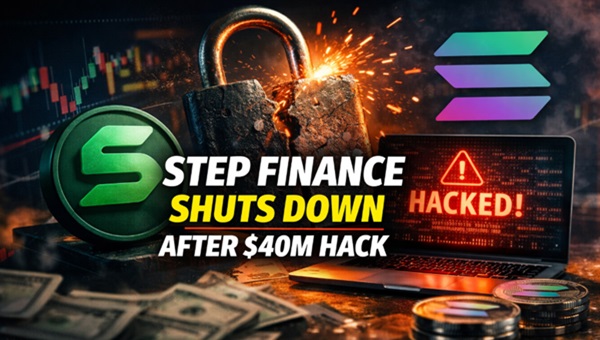
The attack did not exploit smart contracts. Instead, it compromised internal authentication through team devices, allowing attackers to access and transfer funds. The distinction matters: the failure occurred in operational security rather than code logic, demonstrating how mature protocols remain vulnerable outside the blockchain itself.
The platform’s token collapsed in value, and associated services began winding down operations. The incident contributed to declining confidence across Solana’s DeFi environment, where total value locked has already fallen substantially from prior highs.
The episode underscores a shift in risk perception. As smart contracts become more audited and hardened, attackers increasingly target human access points rather than protocol mechanics.
Taylor Lindman, Chainlink Exec, Joins SEC Crypto Force
In a parallel regulatory development, the SEC appointed former Chainlink legal executive Taylor Lindman as chief counsel of its Crypto Task Force. The move places someone who worked directly with decentralized finance infrastructure inside the regulatory body overseeing it.
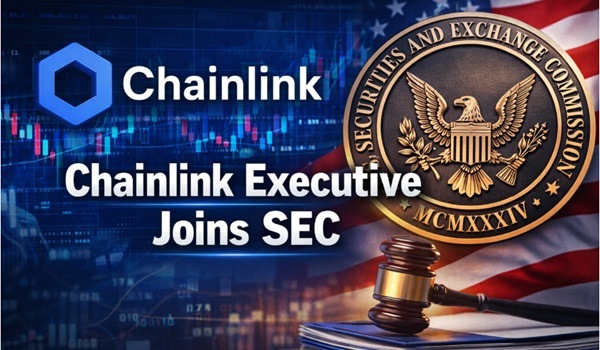
The appointment suggests a change in regulatory posture from enforcement-first toward technical understanding. The task force has focused on defining security classifications, registration pathways, and tailored disclosure standards rather than solely pursuing legal actions.
For the industry, the significance lies less in immediate policy change and more in perspective. Regulators have historically struggled to interpret decentralized systems through traditional frameworks.
Bringing a practitioner into rulemaking introduces technical expertise into the process, potentially yielding clearer, more workable guidance.
The Bigger Picture
This week’s events reveal crypto progressing along two opposing emotional directions at once.
Regulators are integrating infrastructure, institutions are experimenting with treasury exposure, and policymakers are recruiting industry expertise. At the same time, retail fear is peaking, and security failures remind markets of persistent risk.
The sector, therefore, appears neither fully stable nor fundamentally threatened.


 eabungana@gmail.com
