





 Crypto News – Weekly Recap – March 14, 2026
  Article Contributors

 Fact checked by
 U.S. Treasury Warns Crypto ATMs Are Becoming a Major Fraud Gateway
A new report from the U.S. Treasury Department placed crypto ATMs under growing regulatory scrutiny, warning that the machines are increasingly being exploited by fraud networks.
Investigators say scammers frequently instruct victims to withdraw cash and deposit it into crypto kiosks, directing funds to wallets controlled by criminals. Once the transaction is completed, the funds are almost impossible to recover.
Law enforcement data shows the scale of the problem expanding quickly. The FBI received more than 10,900 complaints related to crypto ATM scams in 2024, with losses totaling roughly $246.7 million. The trend accelerated further in 2025, when Americans reportedly lost around $333 million through similar schemes.
While regulators acknowledged that blockchain analytics tools and artificial intelligence monitoring systems could improve detection, officials suggested that stronger oversight and reporting requirements may be necessary as the machines continue to proliferate.
SEC Signals Leaner Regulation for Tokenization Experiments
While Treasury officials warned about fraud risks, the SEC signaled a more restrained regulatory approach toward financial innovation.
Securities and Exchange Commission Chair Paul Atkins outlined what he described as a minimum effective dose framework for regulation. The concept focuses on limiting disclosure requirements to information that is truly material to investors while reducing unnecessary compliance burdens.
Atkins suggested expanding the reporting flexibility introduced under the JOBS Act, which created an “IPO on-ramp” allowing emerging companies to gradually adopt full public-company reporting standards.
The proposal aims to address a long-term decline in U.S. public listings, which have fallen from more than 8,000 companies in the late 1990s to roughly 4,000 today.
Another major component of the plan involves pilot programs allowing tokenized securities to be issued and traded under limited regulatory exemptions.
The SEC emphasized that tokenized assets would remain subject to existing securities laws. Pilot programs would simply allow regulators to observe how the technology operates before designing permanent rules.
Trust Wallet Introduces Real-Time Protection Against Address Poisoning
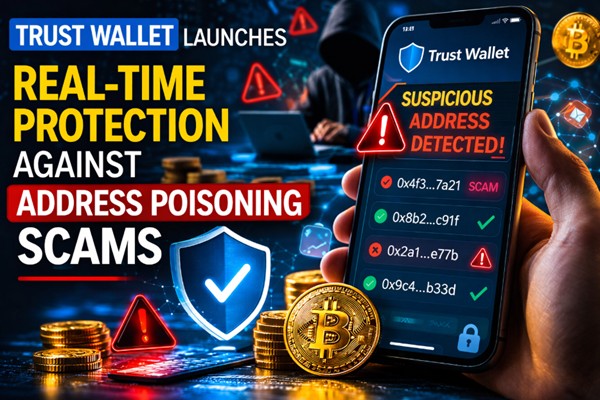
Security concerns also dominated headlines as Trust Wallet launched a new feature designed to prevent address-poisoning scams.
The attack method relies on tricking users into copying malicious wallet addresses from their transaction history.
Criminals send small deposits from addresses designed to resemble legitimate ones, hoping users will mistakenly copy them when sending funds later. Victims often lose funds permanently once the transfer is completed.
Trust Wallet’s new protection system scans transactions in real time and warns users when they attempt to send funds to addresses linked to known scams or suspicious patterns.
The system also flags addresses that appear only in incoming transactions, a common signal of poisoning attacks.
Analysis of blockchain data has identified hundreds of millions of poisoning attempts targeting millions of wallets, with confirmed losses exceeding $80 million across networks.
The growing scale of these attacks has pushed wallet developers to focus more heavily on built-in safety tools designed to prevent human error rather than purely technical exploits.
JPMorgan Faces Lawsuit Over $328 Million Crypto Ponzi Scheme
Legal pressure also emerged this week as investors filed a class-action lawsuit accusing JPMorgan Chase of enabling a massive cryptocurrency Ponzi scheme.
The lawsuit claims the bank allowed Goliath Ventures, a Florida-based firm, to move more than $328 million from investors through accounts that displayed obvious warning signs of fraud.
According to the complaint, roughly $253 million flowed through a single Chase account before portions of the funds were transferred to cryptocurrency exchanges.
Plaintiffs argue that transaction patterns, including rapid inflows from retail investors followed by large transfers to crypto platforms, should have triggered anti-money laundering alerts.
The lawsuit raises broader questions about how far banks’ compliance responsibilities extend when crypto investment firms rely on traditional financial infrastructure.
Senators Demand Oversight of New Binance Investigation
Regulatory scrutiny also intensified around Binance after reports that Iranian networks moved billions of dollars through the Binance exchange while evading U.S. sanctions.
Senators Elizabeth Warren, Chris Van Hollen, and Ruben Gallego pledged congressional oversight of a Justice Department investigation examining whether transactions linked to Iranian groups violated sanctions laws.
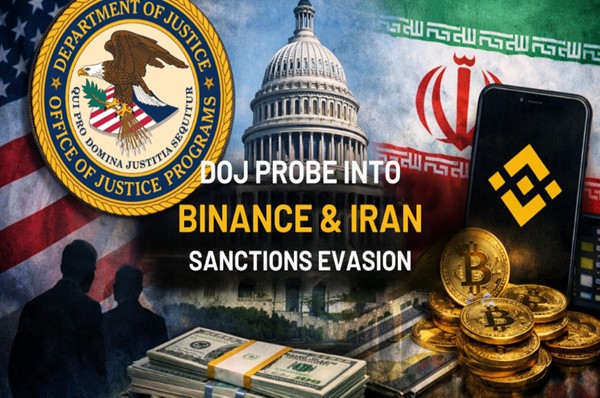
Company representatives say Binance did not directly transact with sanctioned entities and continues cooperating with regulators.
Still, renewed congressional attention places the exchange back under the spotlight as authorities evaluate whether compliance reforms introduced after the 2023 settlement have been effective.






 eabungana@gmail.com
