





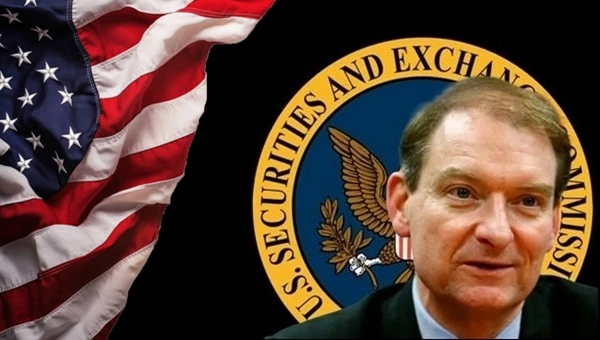
 SEC Chair Signals Leaner Regulation With ‘Minimum Effective Dose’ Approach
  Article Contributors

 Fact checked by

A Shift Toward Materiality and Targeted Oversight
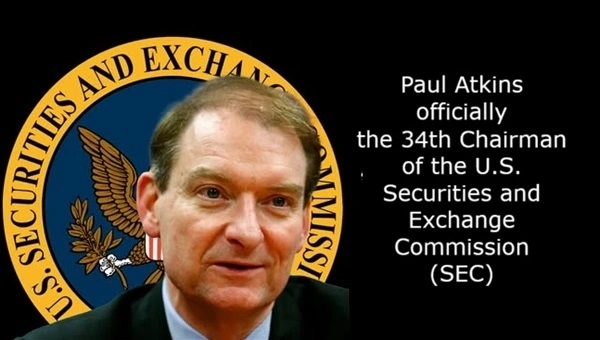
The approach signals a shift in tone at one of the world’s most influential financial regulators. Instead of expanding reporting obligations and compliance layers, the SEC leadership is now emphasizing materiality, targeted oversight, and collaboration with other agencies.
The remarks come as Washington policymakers seek to establish a clearer framework for digital asset markets while preserving investor protections and market integrity.
At the center of the proposal is a narrower view of corporate disclosure. Atkins argued that public companies should focus on information that is truly material to investors rather than complying with increasingly extensive reporting frameworks that may offer limited value.
Under the proposed “minimum effective dose” approach, disclosure obligations would scale based on company size and relevance, reducing burdens particularly for smaller issuers entering public markets.
Revitalizing Capital Formation and the JOBS Act
The SEC chair suggested extending the reporting flexibility created under the Jumpstart Our Business Startups Act, commonly known as the JOBS Act. The law introduced an “IPO on-ramp” for emerging growth companies, allowing them to transition gradually to full public-company reporting standards.
Expanding that pathway could make it easier for smaller firms to access capital markets without immediately bearing the full weight of regulatory compliance.
Such changes would have significant implications for capital formation in the United States. According to SEC data, the number of publicly listed companies in the U.S. has fallen dramatically over the past two decades, declining from more than 8,000 in the late 1990s to roughly 4,000 today.
Regulators and policymakers have increasingly linked that decline to rising compliance costs and disclosure complexity.
Atkins framed the proposed reforms as a way to rebalance the system. Investors would continue receiving critical information needed to make decisions, while companies would face fewer obligations to disclose items considered peripheral or duplicative.
Embracing Blockchain through Tokenization Pilots
Another major element of the policy direction involves the growing role of blockchain in capital markets. The SEC chair voiced support for controlled pilot programs that would allow the tokenization of equity securities under limited regulatory exemptions.
These pilots would permit a small number of tokenized securities to be issued and traded under tightly defined conditions, allowing regulators to observe how the technology functions in live markets.
Tokenization refers to the process of representing traditional financial assets such as shares or bonds as digital tokens on a blockchain. Proponents argue that this approach could improve settlement efficiency, reduce counterparty risk, and streamline the trading process by eliminating some intermediaries.
In theory, tokenized securities could settle transactions almost instantly rather than relying on traditional settlement cycles that often take several days.
The SEC has stressed that tokenization does not alter the underlying legal status of securities. Even when shares are represented on distributed ledgers, they remain subject to federal securities laws and investor protection requirements.
Regulators, therefore, view pilot programs as a practical way to gather data before designing permanent rules for blockchain-based market infrastructure.
Inter-Agency Harmonization: SEC and CFTC Collaboration
The tokenization initiative is unfolding alongside broader regulatory coordination between U.S. financial authorities. Earlier this week, the SEC and the Commodity Futures Trading Commission announced a formal Memorandum of Understanding designed to strengthen collaboration between the two agencies. The agreement aims to reduce regulatory fragmentation and eliminate duplicative oversight across markets that increasingly overlap.
The agencies stated that the arrangement will guide joint efforts to support lawful financial innovation while maintaining market integrity and investor protection. Both regulators acknowledged that conflicting rules and jurisdictional disputes have historically created uncertainty for market participants, particularly in emerging areas such as digital assets.
Under the new framework, the SEC and CFTC plan to coordinate rulemaking, examinations, and enforcement where their responsibilities intersect. Officials from both agencies said the goal is to ensure that economically similar financial activities are subject to consistent standards regardless of which regulatory regime formally applies.
A New Philosophy for Financial Innovation
The harmonization effort also reflects a broader shift in regulatory philosophy. For years, digital asset companies criticized U.S. regulators for relying heavily on enforcement actions rather than clear rulemaking. The current strategy emphasizes transparent guidelines and pilot programs as a way to reduce uncertainty while maintaining oversight.
For blockchain advocates and financial technology firms, the proposed tokenization pilots represent one of the most concrete regulatory openings in years. Several major financial institutions have already experimented with tokenized assets in private or limited environments, including digital versions of bonds and collateral instruments used in derivatives markets.
Market participants are now watching closely for the next steps. Pilot frameworks for tokenized securities, possible adjustments to disclosure rules, and further coordination with the CFTC are expected to shape the regulatory landscape for digital assets and capital markets throughout 2026.



 eabungana@gmail.com
